vultures
Posted: April 8, 2013 Filed under: breast cancer | Tags: scary birds, vultures, WEGO HAWMC, WEGO Health 4 Comments
SaY wHaT???
Posted: April 7, 2013 Filed under: breast cancer | Tags: ain't nobody got time for that, Betty Ford, crazy cures for cancer, HAWMC, pinkwashing, soursop, stupid things people say to those with cancer, Susan G Komen for the Cure, Sweet Brown, WEGO 10 CommentsDay 7 of the WEGO Health Activists Writer’s Month Challenge (HAWMC). Has it really only been one week? Dang, this is harder than I expected. Today’s challenge is much easier than yesterday’s was, though: What’s the most ridiculous thing you’ve heard about health or your condition?
There have been many ridiculous things said and written and passed along about my “condition.” Thanks to Komen, breast cancer is commonly thought of as the “good” cancer, the “pretty” cancer. You know, the one wrapped in a girlie pink ribbon and represented by rosy-cheeked, full-breasted warrior-women crossing the finish line of the race that’s allegedly going to “cure” my “condition.” (In fairness, it’s also thanks to Komen that my “condition” is one I can blog about without shame or fear or offending someone by using the word “breast.” Betty Ford gets credit for that, too. I can like Komen for de-stigmatizing my “condition” but still shake my head at its idiot pinkwashing.)
One of my all-time favorite ridiculous things said about my conditions is “Well, it sucks about the cancer, but at least you get new boobs.”
Ahem.
I didn’t need new boobs. I was just fine with the set I had. The new ones? Notsomuch. Perhaps this ridiculous statement applies to women who fall into the average age of those diagnosed with breast cancer — mid-60s. If I were 20 years older, I may well think, Hmmm, these old girls have served me well, but it wouldn’t hurt to have a little renovation. But I’m not 20 years older, and I don’t think that. What I do think, though is this: I sure miss my old boobs. And this: Is it wrong for me to envy my pink-ribbon sisters who had the “easy” path of mastectomy to tissue expanders to implants, rather than the not-so-easy path of mastectomy to tissue expanders to several fills of said expanders to infection under the right expander to draining both expanders to removing both expanders to hospitalization for 28 days in one summer to multiple surgeries to extract dead tissue to wound specialists and a wound vac to daily home-health nurse visits to clean and dress that wound to an IV pole in my very own home for round-the-clock IV antibiotics to a year’s worth of oral antibiotics to a hellish reconstruction to two (so far) revisions to try to make that hellish reconstruction’s results palatable. Is that wrong?
Another ridiculous thing said about my condition: “Well, you look good.”
Sigh.
Too bad the general public doesn’t have x-ray vision. Not the kind that lets creepy guys peep under women’s clothing (although I do like the idea of a creepy guy having his retinas burned by peeping under my shirt!), but the kind that lets people see what a breast cancer patient looks like on the inside. Not so good. During the hey-dey of the worst of my BC “journey,” I may have slapped on some lip gloss and clawed through my closet for a top that would accommodate the many stages of my chest expansion. I may have smiled and said “I’m good” when asked how I’m doing in the midst of my own personal apocalypse. Maybe I looked good on the outside — a little sun on my cheeks is easy to achieve pretty much year-round in the great state of Texas. Maybe I portrayed a person who was faring well despite having both breasts removed — people do tend to see what they want to see, and I’m the queen of refusing to fly my vulnerability flag. Perhaps people just don’t know what to say. Either way, we cancerchicks may look good on the outside, but we feel like crap on the inside.
But the all-time most ridiculous thing ever said (to me) about my “condition” is this. Here’s the truth: if something as simple as eating a particular fruit or swallowing a particular supplement could cure cancer, it would. Period. End of story. Oncologists around the world would be out of work, infusion rooms and radiation centers would be rented out as party sites, and Big Pharma would go bankrupt.
If you’re tempted to share the latest internet craze for curing cancer with someone who’s actually dealing with cancer, let me quote Sweet Brown, my favorite meme:

bet.com
Dear Me,
Posted: April 7, 2013 Filed under: breast cancer, cancer fatigue | Tags: HAWMC, WEGO, WEGO Health 11 CommentsDay 6 of the WEGO Health Activist Writer’s Month Challenge nearly made me give up on the daily task of blogging about my “condition.” I don’t like my “condition” and I don’t like the touchy-feely side of dealing with that “condition.” I like to keep my word, though, and I said I would take on this challenge, so here goes.
Today’s prompt: Write a letter to an older you. What lesson do you want to make sure you remember?
Well, with my dilapidated body, blown-out knee, and menopause-induced lunacy, the older version of me scares the hell out of the current version of me, so I’m going to write a letter to the younger version of me.
Dear Younger Me,
Listen up, missy: that college dream of yours to light Madison Avenue on fire with clever advertising campaigns isn’t gonna happen. You don’t like the Big City — too many people and way too many germs. That other dream of writing children’s books isn’t going to happen, either. You do end up reading a whole lot of good ones, though, to a couple of precious kids who look so much like your baby pictures it’s scary.
Your smart mouth will get you into a fair amount of trouble. I’d tell you to be careful, go easy, and use restraint, but we both know you’d flip me the bird and keep right on sassing. I can tell you that eventually you do learn the fine art of holding your tongue, but it will never come easy.
That sweet, loyal, smart, cunning and unmatched yellow dog who grips your college-aged heart will never let go. She will protect you, and then your children, for nearly 15 years. She will guard the entrance to the nursery and sleep under the crib. She will show you her back when you get out your suitcase, because she knows you’re leaving, if only for a few days. Her time on this Earth will grow short but she will stick it out longer than anyone expects because she will insist on seeing you through an even rougher patch: the death of your sweet mama.
Guess what, girlie? Your sweet mama keeps a tight grip on your heart, too. Not a day passes without you feeling the loss, in big ways and small ways. (Note to self: don’t give up on trying to make her pie crust. It won’t ever be like hers, but keep trying.)
Just about the time cancer steals your beloved mama, you’ll start getting an annual mammogram. You’re ahead of the schedule thanks to that mama-stealing cancer, and every year the mammogram will come back funky. Don’t settle for the “dense tissue” rationale. There’s a tumor growing, and it ends up taking up a lot of space, both in your body and in your life.
Look, I know you’re going to be busy living your life and raising those two little kids when the diagnosis comes, but please, brace yourself, because it’s going to get ugly fast. And say a little prayer to the environmental-services gods who control your operating room on the day of your mastectomy; maybe we can avoid that post-mastectomy infection that will reorder your life. And BTW, the bilateral mastectomy was totally the right choice. Good girl for following your gut. There will be no hint, not a single whiff, of cancer in your left breast, but it’s there.
Give up right now on thinking your cancer “journey” will be “one and done.” It will be more circuitous than you can ever imagine, and it will change you in ways you won’t discover until years later. Oh, and before you even begin that circuitous journey, you’re going to have to deal with melanoma on your right foot. I know, who puts sunscreen on their feet, right? Hate to tell ya, that even though you catch it early, the surgery to remove the melanoma will be the most painful thing you will experience. Yes, it’s worse than childbirth and a bilateral mastectomy. Oh yeah, about childbirth–when your water breaks, the baby is coming. Yes, he’s early. No, you haven’t finished the birthing class or packed your bag, but it doesn’t matter. And you’re going to get teased for decades for reading ahead in that “What to Expect” book on the toilet in the middle of the night when your water has broken and your much-better-prepared spouse sleeps peacefully, unaware of your foolishness.
It turns out fine, the baby is healthy (but hard-headed). Even the cancer thing is manageable. Not easy, but manageable. I think we both know you can handle it. You’re going to learn a lot, whether you want to or not. Your limits will be tested. You’re going to make some true and life-long friends along the way. You’re going to unload friends, too, in one of many hard-learned lessons. You see, there are people who are willing to give what they want to give, not what you need. This is a very important distinction. Trust me, you’re much happier without ’em. A couple more pieces of advice: first, don’t ignore that knee pain while you’re running. Stretch before and after you pound the pavement. Listen to your body. Pain is its way of saying something is wrong. Ice your knee after each run. I know it’s a hassle, but so is living with constant pain. Years down the road, you’re going to be embarrassed by how you hobble down the stairs like a woman twice your age. You’re going to be frustrated by the ways in which your body fails you. I don’t have an answer for how to deal with that, because I haven’t figured out how to deal with that. I do recommend drinking champagne as often as you can. I don’t have to tell you to never, ever pass up an opportunity to drink some bubbly. The lesson I want you to remember is that the sound of that popping cork will soothe your soul, every time.
Love,
Me
Cancer Vixen
Posted: April 5, 2013 Filed under: breast cancer, cancer fatigue | Tags: HAWMC, soursop, things not to say to cancer patients, WEGO, WEGO Health 5 CommentsDay 5 of the WEGO Health Activists Writer’s Month Challenge: “If I could do anything as a Health Activist…”
My first thought was to cure cancer. Today’s prompt said to dream big, so I am. 
Since it’s my dream, I’m claiming two superpowers. In addition to kicking cancer’s ass, I would eliminate all the stupid/inane/insensitive/uncaring/clumsy/offensive things people say to those of us in cancerland. Yeah, yeah; I know sometimes people mean well and just don’t know what to say, but that’s no excuse. No cancer patient needs to hear a comment like this, or certainly not this, no matter how well-intentioned the awkward speaker should be.
So if I could do anything as a health advocate, I would ensure that no one in cancerland ever had to hear anything like this. Ever. 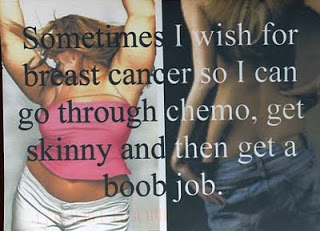
Care page, HAWMC day 4
Posted: April 4, 2013 Filed under: breast cancer | Tags: advice for new cancer diagnosis, Army of Women, breast cancer resources, Dr Susan Love, HAWMC, resources for those newly diagnosed with breast cancer, think before you pink, WEGO 7 CommentsToday’s mission in the Health Activist Writer’s Month Challenge: Create a “care page” – a list of your best resources that someone who is newly diagnosed could go to when starting to advocate for themselves or a loved one.
Consult the mainstays such as Breast Cancer Action, and Think Before You Pink, and Dr Susan Love Research Foundation, and breastcancer.org, and The Rose. Consulting “Dr Google” once a diagnosis has sunk in is something most people do.
Follow a blog that appeals to you. Whatever flavor you prefer — spiritual, snarky, research-oriented, or off-the-cuff like this little blog — there’s a blog out there to meet your needs. Among these blogs, you’ll find posts such as this and posts such as this with practical advice from those who’ve been there. Much of this information is rather like on-the-job training; you don’t know what you need to know until you need to know it. Take the hard-won wisdom from those who have walked this walk before you.
My best piece of advice, in a sea of good advice, though is this: Do what you believe in your heart of hearts is best for you. Whether a prophylactic bilateral mastectomy instead of a lumpectomy, whether undergoing reconstruction or flaunting the flat & fabulous look, or whether pursuing a second or a third or a fourth opinion. Follow your instincts and listen to your gut.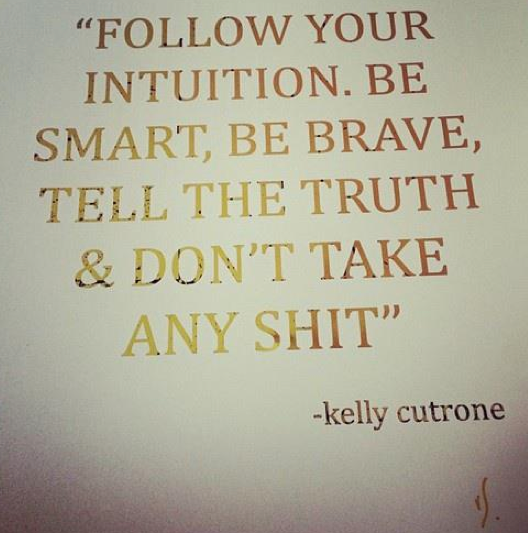
Wordless Wednesday, HAWMC
Posted: April 3, 2013 Filed under: breast cancer | Tags: breast cancer and young women, David Jay photography, HAWMC, psychological effects of breast cancer, The SCAR Project, WEGO Health 12 CommentsDay 3 of the Health Activist Writer’s Month Challenge:
“Wordless Wednesday. Post a picture that symbolizes your condition and your experiences.”
My first thought was of the many powerful images in David Jay’s The Scar Project. I’ve written about this amazing body of work here and here. The photographs are raw and real, just like cancer itself.
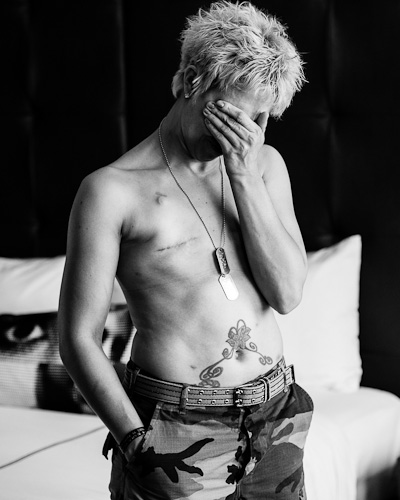
David Jay Photography
WEGO HAWMC
Posted: April 2, 2013 Filed under: breast cancer, menopause | Tags: breast cancer, breast cancer awareness, HAWMC, tamoxifen, Tamoxifen side effects, WEGO Health 5 Comments
The WEGO HAWMC is quite a mouthful! WEGO Health describes itself as “social media’s most active online health community — Health Activists. These influencers, organizers, connectors, leaders and contributors are passionate about helping others lead healthier lives.” WEGO Health Activists have thrown out a challenge: the HAWMC, or Health Activist Writer’s Month Challenge. It’s a post-a-day challenge taken on by several bloggers I greatly admire. One of them asked if I was planning to participate, so here we are.
I missed Day 1, so will start with Day 2, which is pretty scrambled logic for this Type-A girl, but part of the challenge is thinking — and blogging — outside of our comfort zones so I guess I’m in.
Today’s prompt:
Introduce your condition to other Health Activists. What are 5 things you want them to know about your condition/activism?
Hacked off
Posted: March 28, 2013 Filed under: breast cancer, cancer fatigue | Tags: Barbara Ehrenreich, David Jay photography, ER positive breast cancer, hormone suppression, New York Times Well blog, Susan Gubar, The SCAR Project, young women and breast cancer 10 CommentsSusan Gubar has done it again. She’s written another fantastic post for The New York Times‘s Well blog. This one is about The Scar Project, which is near and dear to my heart. Perhaps it’s a theme this week: scars, invisible and visible, and how we cancerchicks live with them for the rest of our lives. The women pictured in The Scar Project will have a long, long time to figure out how to live with those scars, as they are all under the age of 40.
Says Gubar of the young women portrayed: “The youthfulness of David Jay’s subjects wrenches me. Unlike them, I had a good span of my adult life — more than 60 years — before treatment. Their bodies stopped being their own too soon. Did their selves also stop being their own too soon? Cancer scars are physical mutilations of and on the body; but, more than that, cancer scars the psyche, the soul, the spirit. The ‘me’ before cancer is not the ‘me’ after cancer. Nor can these identities always be sutured.”
Yes, Susan Gubar, I think it’s safe to say that our bodies and our selves did indeed stop being their own too soon. I was 40 when I was diagnosed, which is old by The Scar Project standards, but I can say with certainty that it totally sucks to have been denied a good span of my adult life before cancer . It’s a drag. Because estrogen feeds my cancer, and many other varieties of breast cancer, I had to shut off the supply of that vital hormone. Being forcefully fast-forwarded into menopause also sucks. Aging on an unnatural timeframe, well ahead of my peers, does too. Having to face mortality decades in advance extracts a heavy toll on us cancerchicks. We want to live long, healthy normal lives; we want to see our children grow up. We hope that cancer doesn’t have other plans for us. Gubar touches on this, too, writing this about the young women portrayed in The Scar Project photos: “The ones that grip me stare at the photographer — at me — defiant. They want to live. I want them to live. Like Barbara Ehrenreich, David Jay seeks to unsettle a ‘public anesthetized by pink ribbons and fluffy teddy bears.’” Unsettle away, Mr Jay.
Gubar writes that “David Jay’s portraits contain images of women whose bared breasts look crumpled, concave, synthetic, reconstructed without or with reconfigured nipples, stitched horizontally or vertically or at an acute angle, lumpy, lopsided, wounded, or hacked off. Bravery resides there, beauty elsewhere.”
Wounded. Hacked off. Those descriptions apply both to my body and my soul. My body is wounded, and like my cancer-ridden breasts, I am hacked off. That this disease happens. That it takes so much from those who are so young. That it steals so much beauty, both internal and external. That the scars that remain are so upsetting, so unsettling. That this disease robs us of our youthfulness and our peace of mind. That the cancer experience changes who we are, forever, and not always in ways that are good or positive.
Gubar says that before cancer, she may have been perceived as being “ungrateful for an intact body, taking for granted organs that functioned normally, arrogant about the boons of health, ignorant of the preciousness of life.” As the old saying goes, we don’t know what we’ve got til its gone, and so too it is with cancer. Pre-cancer, I didn’t think about an intact body, fully functional organs, the boons of health and the preciousness of life the way I do now. While there are days I’m grateful to be up and about and not confined to a hospital bed or tethered to an IV pole, there are many more days in which I’m hacked off. While I take notice of air filling my lungs and appreciate my stamina at the gym, that appreciation is tempered by sadness at what I had to go through. While I am happy that I’m capable of achieving strength and fitness again after the cancer, surgeries, infection, and treatment took their pound of flesh (literally), I’m pissed that my triumph is bested by the omnipresent fear of recurrence.
I can identify with Gubar 100 percent when she says, “I remember the ‘me’ before cancer nostalgically. My earlier self could … connect with family and friends spontaneously and lavishly. At times I visualize the diagnosis as a gun aimed at a flying bird — pitched down from the sky in an instant to lie fluttering on the ground.”
Bang!

translations.deviantart.com
Susan Gubar ends her beautiful article by pointing out that “the young women in The Scar Project were gunned down while just trying their wings. With courage, the wounded survivors bear invisible scar tissue beneath the physical scars of cancer: the haunting lost person each might have become, had it not been for the disease. They live, but not the lives they would have led.”
Invisible scars
Posted: March 27, 2013 Filed under: breast cancer, cancer fatigue | Tags: Dance Moms, late-effect side effects from cancer treatment, psychological effects of cancer, scars from cancer, Stupid Dumb Breast Cancer, Surviving Survivorship 16 CommentsIn Cindy’s words:
I wanted to post my thoughts on the topic of invisible scars, and the darkness of hovering clouds for the cancer survivor. Throughout this document the words “cancer survivor” are loosely used, as cancer survivors are not always quite as fortunate as the words imply. Yes, their cancer is in remission, and that is incredibly wonderful! However … the survivor continues to spin, fearful of what may come next.Our visible scars are reminders of each step and path along the way of disease or injury. The invisible scars run much deeper. Even when the physical scar starts to fade in color and blend in with surrounding skin, the invisible scar residing just below it continues to prevail.For me, going through major health events, resulted in a darkness like no other. The darkness hovers, and follows me around like Charlie Brown’s friend PigPen’s cloud of dirt. This pesky dark cloud of dirt doesn’t magically go away, or even diminish. It’s a lifetime event. Actually, it grows with each late-effect side-effect issue discovered. I may be tricked into thinking it has finally subsided, but its still there, poised and ready to strike at any moment in some new unknown way.I will say, the invisible scars can show themselves in unkind outward ways. They are indeed ugly and evil on their own. Holding inside the frustrations of the incredible physical changes I’ve encountered over the past 7 years takes a toll emotionally and messes with my psyche. Occasionally, the frustration pours out, like a burst of bad energy. It’s the darkness of the cloud that never gives my pea brain a rest.
We all definitely have our day to day issues to deal with. Work, the car, the kids, the spouse, the toilet overflowed, the dog ate the cat, etc. A cancer survivor has those plus these invisible scars weighing them down.

In 30 years…
Posted: March 12, 2013 Filed under: breast cancer, cancer fatigue | Tags: average life expectancy, breast cancer and young women, diagnosed with breast cancer at 40, living with cancer, metastatic breast cancer, nosocomial infection, psychological effects of breast cancer, PTSD and cancer, the crow yoga pose, the wheel yoga pose, vinyasa yoga, yoga 14 CommentsYesterday walking out of yoga with my favorite girl, I was relaxed and refreshed and thoroughly enjoying the first day of spring break. On our way to the locker room, the woman walking ahead of us turned to compliment my girl on beginning yoga at such an early age. My girl beamed in her ineffable way and chatted politely with this woman while I, the eternal germophobe, washed my hands. My girl gave me a look that said, “Seriously, Mom, the only thing you touched was your own personal yoga mat, so why are you scrubbing your hands like that?” Such is life after a nosocomial infection.
My girl and the woman discussed their most-favorite and least-favorite yoga moves, and after a short debate on the wheel and the crow, the woman told us that she’s been doing yoga for 30 years. My girl’s eyes grew wide at this, and I imagined her picturing herself 30 years from now, a most experiences and tranquil yogi.
Rather than smiling at my girl’s fledgling love for yoga, I was struck by a moment of panic and a most unwelcome thought: Will I even be alive to do yoga in 30 years?
Not to be morbid, but this is life after cancer.
When I was diagnosed at age 40, my breast surgeon told me something that has stayed with me through the worst parts of fighting this disease. Worse than facing the reality of losing both breasts as I faced a bilateral mastectomy at a time when most of my peers were reclaiming their bodies after years of childbearing and breast-feeding. While many of my friends were undergoing elective cosmetic surgery to perfect their post-baby bodies, I instead was looking at pamphlets illustrated with grey-haired grandmotherly types considering their surgery options.
My sweet breast surgeon imparted a fact about my life after cancer: that I would spend more years fighting this disease–whether actively (swallowing an estrogen-blocking pill every morning for 5 or 10 years) or inactively (chasing fears of mets from my mind on a daily basis)–than I had been alive.
And that’s the best-case scenario, in which I actually live more than 40 years with this disease rather than succumbing to its terror, as is the case of some 40,000 women in the United States every year. Of course my sweet breast surgeon was thinking best-case scenario when she told me this, and at the time I had no earthly idea how much mental havoc this disease can wreak. Had my sweet surgeon predicted or warned me that on any given day, even years after I had allegedly slain the beast that is cancer, that beast would have the power to plant such thoughts in my head as that which brought me up short yesterday after yoga, I would have likely run screaming from the room.
Would I even be alive to do yoga in 30 years?

charmedyoga.com
What kind of thought is that??? That, my friends, is the power of cancer. It can erase the calming, centering effects of yoga in a single bound. It can swipe the joy of the beginning of spring break in one fell swoop. It can plant a seed of recurring fear and doubt with the greatest of ease.
The Social Security Administration estimates that the average life expectancy for a female in the US these days is 85. Simple math tells me that best-case I’m looking at 45 years post-cancer. More years fighting it than years I’ve been alive. Even with low recurrence-rate predictors and stellar care from top-of-their class physicians and access to always-improving tools that monitor my cancer’s efforts to reinstate itself, the recurring fear and doubt prevail. Within two minutes of bidding my yoga instructor namaste, cancer had infiltrated my thoughts and led me to wonder what my chances are of being the grey-haired grandmotherly type rolling up my yoga mat and heading to class.

charmedyoga.com
I know, I know, we residents of cancerland are supposed to think positive. We are advised by all manner of sources–both sought-after and unsolicited–to assume the best. We are told to visualize it and believe it and it will happen. We are told that what’s meant to be will be.
But that doesn’t stop the automatic response that cancer brings. I can think positive and assume the best and visualize and believe all I want. I can employ every cancer-fighting weapon from pharmaceuticals to superfoods. I can hope and wish and pray to the anti-cancer gods. But cancer will do whatever it damn well pleases, and if it wants to come back and rudely interrupt my life, it will. If cancer wants to cut short my plans of doing yoga for the next 30 years, it won’t think twice.
That, my friends, is the power of cancer.

 The Pink Underbelly