girls’ trip
Posted: June 22, 2011 Filed under: breast cancer | Tags: breast cancer, cancer battle, cancer diagnosis, Fuqua School of Business, hospital, Houston, infection, infectious disease, IV antibiotics, MBAs, mycobacterium, older grad students, post-mastectomy, PTSD, recovery, South Padre Island, survivor, top-10 business school 8 CommentsOnce upon a time, in a city far, far from Houston, there was a group of young-ish women. All had relocated from every corner of the country with young kids in tow to help fulfill their husbands’ dream of getting an MBA from a top-10 business school.
 None of the women knew anyone in the new city, and all were a long way from home. For two long years, without paychecks and luxuries like babysitters, the women bonded while the hubs crammed their brains with all things MBA-related. Once the menfolk had diplomas in hand, the group of women dispersed, to new homes in new corners of the country.
 One night before going separate ways, the women left the hubs and kids at home and went out for a nice dinner. There the plans were laid and a vow was made: let neither distance nor the rigors of child-rearing sever the bond created by hardship and the shared need for breaks from their preschoolers. The solution: come together for an annual girls’ trip, to reconnect and recharge.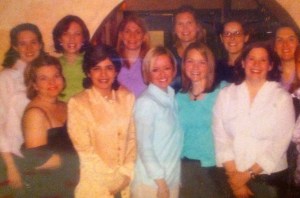


The first trip was to San Francisco, then Sanibel Island in Florida. Next came Captiva Island, then Scottsdale. Park City was next, followed by Lake Tahoe. Every year was a different locale, but the theme was the same: reconnecting. 
The women had gone their separate ways, and a few left the domestic scene to pursue careers in law and medicine. The others continued to toil on the homefront, trading preschool and playdates for elementary school and homework. The kids grew up, and a few new babies joined the fold. One thing remained the same, however: the women’s commitment to the annual trip.
The End
Well, not really the end. Just the end of my little story.
It’s the eve of the 7th annual Duke girls’ trip, and my suitcase is packed. My boarding pass is printed. My Kindle is full of new books to be read uninterrupted by young children. My house is stocked for my peeps to exist in relative ease in my absence. I’m going, I’m really going.
After 7 years, you’d think that preparations for the trip would be somewhat by rote. Decide on the locale, find lodging, book flights, pack a bag, kiss the fam good-bye, and vamoose.
But not for me. See, last year I was ready for Tahoe. That trip was to have taken place 4 weeks post-mastectomy. As I described it this time last year, the trip was “my goal, a partial finish-line, and my sanity-saver since my diagnosis.” One of the first things I asked my superstar breast surgeon, Dr Dempsey, upon diagnosis, was if I’d still be able to take my girls’ trip. Tahoe with my Duke girls gave me something concrete to work toward in my recovery from surgery, from being diagnosed with cancer at age 40.
Instead of stocking the fridge and packing my bags this time last year, I was in the hospital, sick–really sick–with a nasty infection. I was admitted to the hospital unexpectedly when symptoms of the infection appeared out of nowhere. I literally had seen Dr S the day before the symptoms cropped up; fine one day, sick the next. The day I was hospitalized, I was still clinging to the hope that I’d be in & out of there quickly and still be able to go on my trip. Silly, silly girl. My mind was willing, but my body said “No can do.”
After countless IV bags full of different antibiotics, my fever kept spiking and I got worse instead of better. While the scarier bugs like anthrax were quickly ruled out, the specific infection remained elusive. My infectious disease doc told me that the cultures grow at their own pace, and the culturing is done old-school: in a Petrie dish in an incubator in the lab downstairs. I was confined to the hospital bed until the growth was complete, and no one knew when that would occur. The day before the Tahoe trip, I had to concede that I wasn’t going to make it. Rotten luck.
While it broke my heart and seriously injured my fighting spirit to tell my Duke girls I wouldn’t be joining them, untold hard times followed. Missing the trip was chump changed compared to what was to come. Looking back at my Caring Bridge journal entry for June 10th of last year yielded this:
“I should be on a plane right now, en route to Tahoe, but instead I’m in an ugly gown, sitting on scratchy sheets in an uncomfortable bed (most definitely not a Tempurpedic mattress). Looks like I’ll be here a while yet.”
I don’t recall this part, but it must have happened:
“They moved me across the hall last night to a new room. My new neighbor is an older Asian man who talks louder than anyone I know, and so do all of his relatives. In fact, I just got up my scratchy sheets & walked across the hall in my ugly gown to shut his door. Sheesh. This hospital has an entire floor for Asian patients, which is pretty cool and indicative of this huge city we live in, but I’m wondering why he’s not on that floor.”
Tonight, on the eve of the 7th annual Duke girls’ trip, there are no scratchy sheets and there is no ugly gown. There’s a not-so-youngish-anymore woman who’s had one helluva year, who’s ready to get on that plane and make up for lost time. SPI, here I come. Now that’s a happy ending!
As if the tornado wasn’t bad enough…
Posted: June 14, 2011 Filed under: breast cancer, infection | Tags: AL East, Alex Rogriguez, Antibiotics, Dustin Pedroia, Freeman Hospital, fungus, hurricane categories, infection, infectious disease, Jacoby Ellsbury, Joplin tornado, mucormycosis, mycobacterium, psychological effects of cancer, PTSD, recovery, Red Sox Nation, survivor, tornado EF-5 1 CommentI feel a weird dichotomy of emotion when a friend hears about a rare and hard-to-treat infection and thinks of me. On one hand, it’s nice that my friends are the sort of people who know what’s going on in my life (I guess being a blabbermouth and having a blog help). On the other hand, it’s a weird feeling to be the one associated with the rare and hard-to-treat infection.
No matter, the horse is out of the barn, and the fact of the matter is that I did indeed have a rare and hard-to-treat infection, I am a blabbermouth, I do have a blog, and my friends rock.
So when the news broke that several people in the wake of last month’s giant killer tornado in Joplin, Missouri, have contracted a rare and hard-to-treat infection, my name came to mind. Perhaps this provides a bit of perspective for me. On many levels. It reminds me that while I’ve been through a lot, I also have a lot for which to be grateful. Namely things like this: #1, I wasn’t involved in the devastation of that giant killer tornado. #2, my rare infection was hard to diagnose but not especially hard to treat; just a giant pain in the ass. #3, my rare infection wasn’t deadly, as the one in Joplin is. #4, my rare infection is gone, baby gone. And, because I like odd numbers in lists, #5, I’m done with the 267-day course of oral antibiotics needed to treat my rare, pain-in-the-ass infection. Oh, if only I got paid extra for using hyphens in my modifiers.

cbsnews.com
The giant tornado last month in Joplin stirred up a lot of soil in its destructive path, and it uncovered mucormycosis, a deadly fungus among us. Like most bacteria and fungus, mucormycosis is all around us but only affects people who are already limping along with weakened immunity. The proverbial kicking a man who’s already down. It seems to prey upon people with diabetes, leukemia, lymphoma, and AIDS as well as those who have had an organ transplant and those who engage in chronic steroid use (Alex Rodriguez, you better be careful).
I must digress here for a moment about the mighty A-Rod. We don’t like him much in our house (understatement of the year, right there). Not just because we are die-hard, hard-core Red Sox fans and he’s on that other AL East team. You know, the one that wears those gawd-awful pinstripes. Ick. Well, A-Rod, in our opinion, typifies everything that’s wrong with pro sports: the drugs, the attitude, the disdain for the very fans who provide him job security. Imagine our surprise and delight when we found this yesterday: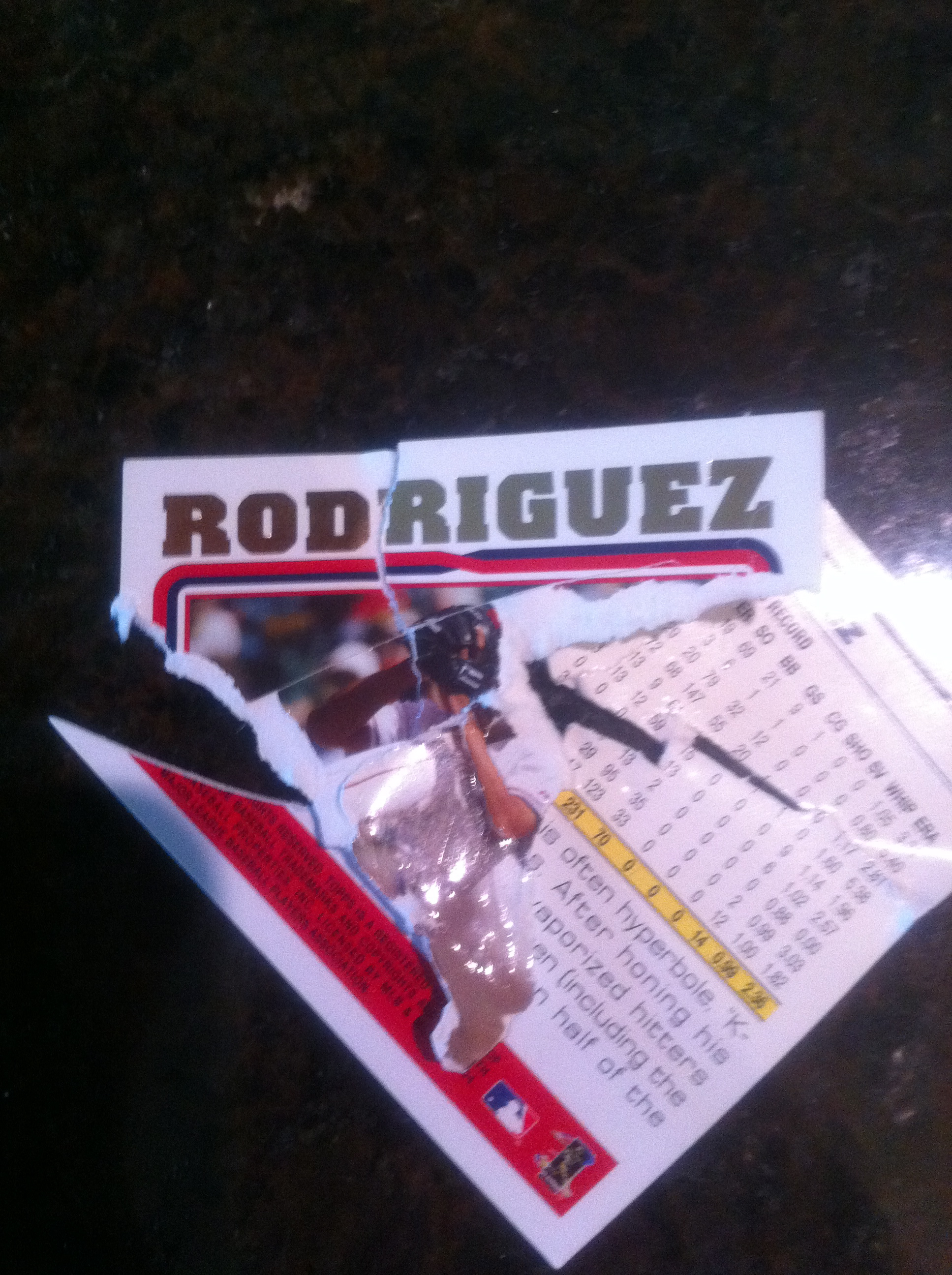
An A-Rod baseball card, chewed to bits by our little dog Pedey. I love it! It’s even funnier because that little dog is named for Payton’s favorite Red Sox player, Dustin Pedroia. The idea of Pedey going after A-Rod fills my heart with pride. I’ve said before that Pedey is not much like his namesake: he’s lazy and clumsy with a ball, but in this case, Pedroia would be proud of this little dog for pouncing on A-Rod and tearing him to bits!
As long as we’re digressing for baseball-related ramblings, I might as well post a pic of my boy-crush, Jacoby Ellsbury. It’s been a while, and I know my loyal readers have missed him. Here ya go.
You’re welcome.
Ok, back to the Joplin tornado and its unwelcome sidekick. The tornado was a big one. An EF-5 to be precise. The EF scale refers to the Enhanced Fujita scale, which was developed at the Wind Science and Engineering Research Center at Texas Tech University. Yay Red Raiders. I don’t know much about the tornado scale, being a bit more familiar in this neck of the woods with the Saffir-Simpson Hurricane scale, but a quick peek on Wikipedia tells me that an EF-5 tornado means the storm has winds in excess of 200 mph. A bad-ass, scary storm, to be precise.
The May 22nd tornado cut the city of Joplin roughly in half with an estimated 7-mile-long by 1-mile-wide swath. It moved slowly and stayed on the ground rather than touching down and moving back up. All of these factors combined equal untold destruction, a death toll of 151 people, and the unleashing of a nasty fungus.
Eight tornado victims have contracted the mucormycosis, although public health officials won’t make an official link between the fungus and the tornado. Four of the people who tested positive for mucormycosis have died. It’s a nasty bug that spreads fast and can invade the blood supply of its victims, who typically have injuries and secondary wound infections. Sound familiar? Ugh. The rush of feelings and memories this topic evokes roars in my head much like a tornado. I think my PTSD is showing.
The mycormycosis fungus is usually found in soil and wood and enters the body either through a puncture wound or when a person breathes in mold spores. The dirt or vegetation becomes embedded under the skin, and mold is actually found in the wounds of people who have this bug. In some cases, wounds that had been stitched up after the tornado had to be reopened to clean out the contamination. Again, sound familiar? The incubation period is a little shorter on the fungus compared to the mycobacterium, and hopefully the fungus presents itself faster than the myco; both times I’ve been tested for that damn myco it took 6 weeks to present itself.
People with weakened immune systems who come into contact with this fungus have a mortality rate as high as 90 percent. Yes, you read that right: 90 percent.

wikipedia.com
It’s strange how the spores of this fungus look almost artistic under the microscope, yet can wreak unimaginable havoc on the human body. Compare that to my bacteria’s photo and you can see how vastly different these bugs appear under the microscope and why I have enormous respect for my sweet infectious disease doc. You rock, Dr Grimes! 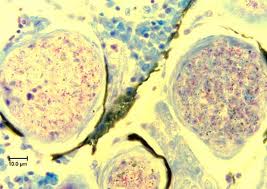
Because the mucormycosis fungus is so rare, medical research is limited, and treatment is simple but fraught with complications. Treating it sounds eerily familiar to me: confirm the bug, excise the affected tissue via surgery, and administer long-term and powerful antibiotics. Same plan I followed for the mycobacterium.
The Centers for Disease Control and Prevention said Friday that it is conducting tests to help investigate the infections, which are so uncommon that even the nation’s largest hospitals might see only one or two cases a year. In fact, Dr Ewe Schmidt, infectious disease specialist at Joplin’s Freeman Hospital, said that in 30 years of practice, he’s seen 2 cases of mucormycosis, both of which occurred in patients who had untreated diabetes.
“To my knowledge, a cluster like this [several cases of the fungus] has not been reported before,” said Dr. Benjamin Park, head of the CDC team that investigates fungal diseases. “This is a very rare fungus. And for people who do get the disease, it can be extremely severe.”
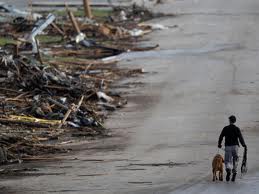
I’m so glad my rare infection wasn’t this deadly fungus. I’m even more glad that my rare infection is gone. And I’m so glad this guy and his dog survived the storm and the deadly fungus.
cbsnews.com
Shut up about the small stuff
Posted: May 31, 2011 Filed under: breast cancer, kids | Tags: breast cancer, cancer battle, cancer diagnosis, Don't Sweat the Small Stuff, kids dealing with mom's cancer, post-mastectomy, psychological effects of cancer, PTSD, reconstruction, recovery, Richard Carlton, survivor 7 Comments
amazon.com
Remember the book Don’t Sweat the Small Stuff? I have a copy, somewhere. Or did at some point. I read it, too, thinking it would be good for someone like me: impatient, intolerant of idiots, and in turmoil over all that I couldn’t control.
The book was on the best-seller list for more than 2 years. Richard Carlson went on to write some 20 books in this series, from Don’t Sweat the Small Stuff in Love and Don’t Sweat the Small Stuff for Women. I think I had the original copy, and knowing me, might not have made it through the entire book. Too impatient for that.
I do recall a few ideas Carlson presented in the book, such as “live in the present” and “become more patient.” Not sure I managed either, since I’m always in a hurry, usually thinking about what needs to be done next, and am most definitely not patient. It’s hard to become “more” of something when you’re not really “any” of that thing.
“Life isn’t an emergency” is another one of Carlson’s anti-sweat-isms. I’m not even sure what that means, but I can tell you for certain that it does not apply to cancer patients. Life most certainly is an emergency when you’re dealing with diagnosis, research, treatment options, doctor’s visits, prescription drugs, mounting medical bills, surgery, hospitalizations, and the like.
Carlson also encouraged us to “get comfortable with the not knowing.” I feel pretty confident saying that this will never happen. Never. Ever. I most definitely will not get comfortable with not knowing what happens next, where this “journey” is going, or what the future holds. Hopefully Carlson took his own advice, as he died from “an illness” in 2006 at age 45. That’s 3 years older that I am now (well, I will be on Wednesday), and 45 is too young to die, IMHO.
I wonder if Carlson would have had the same attitude if he too had been facing cancer. Maybe he would have sweat for a little bit, then invoked his ant-sweat-isms to conquer all of the “small stuff” that invades ones life along with a diagnosis of cancer.
My blog friend Lauren wrote yet another stellar post about this very subject. Every time I read one of her blog posts, I’m hard-pressed to say which part I like most, which idea resonates the loudest, which anecdote finds me nodding my head in agreement, or which passage has the power to make me misty-eyed. This week, it’s this passage that stands out:
“There are no small things in cancer. There are no ridiculous things. People like to tell us not to sweat the small stuff, but there is no small stuff in cancer. There is no such thing as a small assault on our feelings/psyche. Sometimes, the tiniest pebble in our shoe is the one that will make us most weary; indeed, the smallest of stones can derail a train.”
I now feel as if I have permission to sweat the small stuff.
As if I needed anyone else’s permission.
A whole lot of the cancer thing is indeed big stuff. Not to imply that my “journey” is harder than anyone else’s, but I would respectfully submit that being young-ish with dependent kids at home makes for more sweat-worthy stuff along the way. Laura, another blog friend painted a vivid picture of battling cancer while raising young kids when she wondered how to hold back tears when her 6-year-old said, “I forget what you looked like before the cancer when you had long hair.” Tell me how to not sweat that. Please. It reminds me of my own struggle to remember what my mom looked like before cancer. I was 36 at the time. I still have to work to hear her real voice and not her “sick” voice, and I was a grown woman at the time of her battle. Laura also remarked upon the depression and guilt she felt as her 8-year-old son helped his little brother pack his lunch for school while she lay on the couch motionless. That makes me sweaty just reading about it.
Lauren also covered a topic in her post that I recently experienced myself. It involves Press ‘n Seal. 
You know, the stuff in your kitchen that you use to cover food.
While Press ‘n Seal has many domestic uses, it has a medical use too: covering one’s port while said port is slathered in numbing cream, before facing the 20-gauge needle used to puncture the skin and the port membrane to deliver drugs.
Last week I went for my regular port maintenance, in which I have to have the oncology nurses access the port (poke the big-ass needle through it) to flush it. This needs to be done every 4 to 6 weeks to avoid a blog clot. The port is tied into the jugular vein, remember, and I do not want to mess with that big dog.
Before my port maintenance, I use the numbing cream (when I remember) so the needle stick isn’t quite so traumatic. Needles have always been rather sweat-inducing for me. I don’t care what Richard Carlson would have told me, I have never liked needles and they’ve always given me that sweaty-palmed, slightly nauseated feeling.
The day of my most recent port maintenance, I was going from the gym to the oncologist’s office. I told my Runnin’ Buddy to remind me about halfway through to use the numbing cream. I was pretty proud of myself for remembering the cream and the Press ‘n Seal, along with a hypodermic needle from my stash at home and my teeny little vial of B12 that my sweet oncologist prescribed for me. I get a B12 shot once a month, and it was time. I figured since I’d be there, why not ask the oncology nurse to give me the jabful of B12?
Any shot at resuming normal life is gone, baby gone as soon as you realize you have prescription Lidocaine, B12, a needle, and Press ‘n Seal in your purse. Any attempt to seem like a normal person is duly shattered by that paraphernalia in one’s pocketbook.
So at the appointed time, I stood up against the wall of mirrors in the gym, pulled my shirt to the side and slapped a thick layer of cream on my port. Then I cut a small piece of Press ‘n Seal and covered the cream so it wouldn’t sploosh all over my shirt. While I finished my workout, the cream slid around a bit, and the Press ‘n Seal crinkled with each movement, and the curious onlookers were probably wondering what in the world they just witnessed.
Here’s what Lauren had to say about our ol’ friend Press ‘n Seal:
“In all my years of reading on PTSD and grief and trauma with breast cancer, not once have I seen a section on dealing with the emotional trauma of how dehumanizing it is to put Press N’ Seal on your body. Not once have I seen a section on how deeply humiliated you feel when you are made to walk half-naked through hallways on the way to an MRI, where then, in front of the room full of techs, you must disrobe and awkwardly lay on your stomach and hang your breasts through two holes in a plank. There is nothing in any book about how violating it feels having a breast written on in sharpie, and that the last time you see it in your life, it has a doctors intials on it. There is nothing in chapter 3 of any book that discusses the indignity of having our bodies being measured with trigonometry like a drafting project as we lay there naked, and get tattooed by nurses for radiation, especially when you are one who doesn’t like the thought of ink in your skin. There is nothing, nothing about the angst of a port sticking out of your body, or how impersonal it feels having your body lifted and shifted by nurses until you are lined up just right for radiation.”
I can’t speak to the parts about radiation, but on all the other stuff I say yep, that’s right. How strange it is when things like Press ‘n Seal on your body become part of your life. How sad when experiences like the ones Lauren describes become lasting memories, and not in the warm & fuzzy way. How terrible its is when you realize that there’s “nothing in any book about how to come to terms with the death of control over your body and life,” as Lauren so aptly puts it.
I’ve learned, just as Lauren and Laura and millions of other cancer patients have learned, that the small stuff becomes big stuff, and the death of control over our bodies and lives is just one of the many casualties in the “cancer journey.” The PTSD in one’s daily life also chips away at the idea of normalcy, signaling the death of innocence, the end of easy. It may or may not be well-documented, but it’s there. And as Lauren says, “Just because it is not said or written about, doesn’t make it less real. It does not make our feelings about many of these more ambiguous losses less valid, less deserving of mention. It does not make the trauma less valid, it does not make us whiners about small stuff.”
She notes that “we will suffer many more deaths on the cancer journey. Some by things taken from us, and some by things given/done to us. There will be a thousand deaths in cancer, and then a thousand more.”
And so I will indeed sweat the small stuff. Anytime I want.
Tennis time
Posted: May 20, 2011 Filed under: breast cancer, drugs, infection, tennis, Uncategorized | Tags: Arnold Schwarzenegger, battling breast cancer with a friend, Bilie Jean King, breast cancer, cancer battle, cancer diagnosis, DIEP breast reconstruction, infection, IV antibiotics, loss, mastectomy, mycobacterium, new boobs, nosocomial infection, plastic surgeon, plastic surgery, post-mastectomy, PTSD, reconstruction, recovery, survivor, tennis, tennis drills 10 CommentsToday’s the day, people.
I’m paying a call on my true love. Nope, this isn’t a tell-all expose a la Arnold Schwarzenegger.
It’s tennis.
Finally.
I’ve been cleared by my favorite doc to start playing again. To ease back into it and with specific instructions to stop in my tracks if I feel even a tiny pull in my 17-inch-long belly incision. That super-long, super-bad incision is healing up quite nicely, and it’s my job to guard it and baby it.
When I got the green light from my favorite surgeon, I asked his nurse to please put a note in my file and have him sign it to that effect. A permission slip of sorts, so that when I see him again in a couple of weeks and mention tennis, he doesn’t forget he’d given me the go-ahead. The last thing that man and I need is another argument. Although, it has been a while since we had one….
With the tennis ban being lifted, I realized that I haven’t so much as picked up a racquet since The Big Dig, nearly 3 months ago. In fact, I had to dig around in the garage for my tennis bag.  Sadly, it had been consigned to the garage instead of riding shotgun like normal, and it hung on a hook, quite forlornly, I might add, all this time. Over the course of almost 3 months, things like stadium seats and insulated cooler bags were hung in front of my beloved bag, and it took on the role of wallflower instead of constant companion. I had to take my racquet out, just for a sec, and hold it in my hand. Just like old times.
Today’s return isn’t full of the fanfare the met my return to the court last fall, after finally triumphing over the God-awful post-mastectomy infection and all its myriad complications. You loyal readers know the story so I won’t bore you with the details yet again, but suffice to say that the bilateral mastectomy would have been enough, but the nosocomial infection that required 3 more surgeries, nearly a month in the hospital, and endless antibiotics was really enough.
No fanfare, because while returning to tennis after the mastectomy and infection mess was a lot, but it’s easy compared to recovering from the DIEP surgery. Good thing today is just a 1-hour drill, which is the perfect venue for me to see if I remember how to swing that racquet. I’m not giddy with excitement like I was last fall, because the cautious side of me is bracing for disappointment. For this return to not quite work out for me. Although I’ve been cleared, there’s no guarantee that my body is on the same schedule as my heart & mind, and I may well be met with resistance from the battle-weary bod.
See, this is one of the unseen side effects of a cancer diagnosis. Even after getting through all the hard stuff–comprehending the devastating news of diagnosis, all the gut-wrenching decisions, the surgeries & hospitalizations, the never-ending antibiotics & their grueling side effects, the cornucopia of doctors’ appointments, the worry & fear & fatigue–I’m still shell-shocked enough to automatically look for disaster. Although the 267 days of oral antibiotics worked and my infection is cured, there’s still a little part of me that assumes the worst. I can’t even remember the last time my skin opened up to let infected fluid escape, yet I still think I feel it a couple of times a week. It’s PTSD for patients.
So my job today is to say screw the PTSD. Can the shell-shocked tendencies. Bust right through the doubt. Ignore the niggling little voice that asks if I’m sure I want to do this.
Hell yes, I want to do this. More than anything else, tennis to mean means I’ve healed. More than being able to go about my busy little life, more than getting back into the gym, more than being able to lift my arms enough and twist my core enough to dress myself. Tennis means I did it. It’s over.
My friend who also battled the breast cancer beast has dusted off her racquet and returned to the game we both love. While I’m unhappy with the unfinished parts of my reconstruction and she’s unhappy with her not-yet-grown-back-in hair, we’re getting back in the game.
I’m going to take the advice of tennis legend Billie Jean King in my post-cancer tennis strategy:
“Ladies, here’s a hint. If you’re up against a girl with big boobs, bring her to the net and make her hit backhand volleys. That’s the hardest shot for the well-endowed.”
My friend and I are both differently-endowed than we were before breast cancer came to call, but we survived that unwelcome visit and are ready to tear it up on the court. Even if we both get our asses handed to us in match play, I suspect we’ll both be smiling. Happy to be there, happy to have a racquet in hand, happy to be alive.
Extra! Extra!
Posted: April 25, 2011 Filed under: breast cancer, infection | Tags: Antibiotics, breast cancer, cancer battle, DIEP, Harry Potter, hospital, Houston, Houston Chronicle, ICU, infection, infectious disease, Medicare, mycobacterium, nausea, nosocomial infection, PTSD, staph, vascular infection, Zofran 2 CommentsThe front page of the Houston Chronicle today has an article entitled “Infections Top Safety Issues for Hospitals.”
For hospitals?? What about for patients??
I admit, before I became a statistic and contracted a nosocomial infection, I didn’t think much about it, and I would have to say that infections were not the top safety issue for me. Now, of course, I am a statistic, and I’m not very happy about it. Well, I learned a new word (nosocomial,) which usually makes me happy, but this time, not so much. In fact, not at all. I could have happily lived the rest of my life never hearing that word, much less learning about it so intimately.
The article in today’s paper got my attention, for sure, and I half expected to read a story similar to my own, but instead it’s about systemic vascular infections among Medicare patients. The article itself didn’t enlighten me much, and it never said specifically what kind of infections we’re talking about. Not a single mention of staph or mycobacterium to be found.
Sadly, I’m quite well-versed in those two topics.
The article did say that out of 46 hospitals in a 50-mile radius of Houston, half of them reported that Medicare patients under their care contracted infections. Some 472 “hospital-acquired conditions” were reported among 234,000 Medicare patients from October 2008 to June 2010.
I love how the infections are downgraded to “conditions” in print. I can tell you with 100 percent clarity that my hospital-acquired infection was not a condition. It was hell, and it became all-out war.

the-leaky-cauldron.org
Even though I eventually emerged the victor, like most warriors, I will live in the shadow of that victory forever. I don’t know that I will ever feel completely at ease about the infection. I suspect the fear of infection will always be in the back of my mind. Like Harry Potter looking over his shoulder for “He Who Shall Not Be Named,” I will carry this monkey on my back for all of time.
It’s been a while since I have had the recurring dream in which my chest splits open and fluid is pouring out. Maybe that means I’m healing, mentally. In January I wrote about Post-Traumatic Stress Disorder, and how it’s not just for people in the military.
At that time, I was 5 months out from my last hospitalization for the post-mastectomy infection, and it was still alarmingly fresh in my mind. Today, I’m even farther out from that last hospital stay, and hope to continue putting distance between myself and that date. 8 months and counting….
I don’t freak out on a daily basis anymore, and having a reconstructed chest instead of a battle-scarred sunken stretch of mangled skin helps. A lot. To the untrained eye, I look like a normal suburbanite going about her daily business. I’m pretty much recovered from The Big Dig, other than some lingering soreness in my belly incision and the annoying fatigue that I can’t seem to shake. The reconstruction, like the cancer, was a piece of cake compared to fighting the hospital-acquired “condition.”
That “condition” and I go round and round, and even though I was the winner in our balls-out battle this past summer, it will always have a hold on me. The 256 days of oral antibiotics are case in point.
256 days.
Twice a day.
Every day.
256 days. With no end in sight.
The other day, I did something I haven’t done in all that time: I missed a dose.
This is huge for me. I’m a bit OCD when it comes to taking my meds, and I’ve been ridiculoulsy proud of the fact that after all this time, I’ve stayed on course and haven’t had to take a break, to nurse an upset stomach or to quell a GI disturbance. I’ve only barfed a couple of times, and it was because I didn’t eat enough to lay down a good base for those antibiotics.
But lately it hasn’t mattered what I eat, I always feel barfy. Once the simple carbs like crackers & pretzels failed to rid me of the ever-present nausea, I gave in and took the Zofran. The nausea was gone, but I couldn’t keep my eyes open. Clearly this would not be a daytime solution. Once I’d exhausted the simple carbs and Zofran plan, I resorted to alcohol. And lots of it. I figured, if I was gonna feel that bad, I might as well have a good buzz.
Not such a good plan.
I’m really glad I never read the 2001 study on vascular infections authored by Dr CA Mestress of Barcelona. In it he says that vascular infections are “dreadful surgical entities that are usually accompanied by a high morbidity and mortality.” Yikes. I’m really glad I didn’t know that until now. Dr Mestress goes on to say that these infections “require immediate diagnosis and aggressive treatment.”
The recent study on Medicare patients found in the Chronicle today quotes Donald McLeod, spokesperson for the US Department of Health & Human Services as saying, “We wanted to bring transparency to the fact that patients are exposed to potentially unsafe occurrences at America’s hospitals.” He goes on to say he hopes that the recent study will “spur hospitals to work with care providers to reduce or eliminate these hospital-acquired conditions from happening again to even a single patient.”
There’s that word again: condition. That’s gonna bug me.
It seems the recent study focused on vascular infections contracted via catheters, so who knows how many other hospital-acquired “conditions” are unclassified. Instead of giving me the details I want, the article devoted itself to discussing other hospital-acquired “conditions” such as bed sores, falls, mismatched blood types, and surgical objects accidentally left in the body after surgery.
Ok, so none of those things happened to me, and for that, I am grateful. Wonder if Harry Potter can whip me up a cure for the all-day nausea?
It’s not about the chest, stupid
Posted: February 22, 2011 Filed under: breast cancer, cancer fatigue | Tags: After Five Years, blog, blood test, breast cancer, cancer diagnosis, cancer stress, etsy, fear, Gary Larson, mammogram, PTSD, The Far Side, Twizzlers 4 Comments Ugh, yet another reminder that my brain is filled to the brim with cancer ca-ca. I mentioned a few examples of the ca-ca recently, and here I am once again, consumed with it. The latest: while browsing on etsy, I came across a “store” called ETC Chest. My first thought was, hmmm, wonder what kind of breast cancer stuff they have in that “store.” Guess what kind of breast cancer stuff they have? NONE.
ETC Chest stands for “Embroidered Treasures and Crafts” Chests. It has nothing, nada, zilch to do with the human chest, flat or reconstructed.
Well, duh.
Reminds me of my second-favorite Far Side cartoon:
And because you’re probably curious, my all-time favorite Far Side cartoon is:
Thank you, Gary Larson.
This little exercise in idiocracy (I think I just made that word up; I like it. No, wait there was a movie by that title. Never mind.) reminds me of how pervasive the cancer fatigue can be. Lots has been written about how a cancer diagnosis wrecks your life, and even when the cancer is vanquished and you end up with the best-case outcome, it’s always there. The fear, the weariness, the unseen scars.
My blog friend Lauren writes an incredibly eloquent blog called After Five Years. I highly recommend you check it out if you’re curious about what it’s like to live with cancer. She recently wrote a post about going back for a mammogram and it so perfectly captured the fear, the anxiety, the all-around shittiness of living with cancer. I held my breath throughout the entire post, then was gasping and sputtering and although it was only 9:30 a.m., felt like I needed a nap.
Lauren is a lot farther along in the “cancer journey” than I am, and in fact I can’t even comprehend getting a mammogram right now. Of course, having no breasts, it would be a physical impossibility, but still. I’m not yet to the point of having the routine scans that every cancer survivor endures at regular intervals. The stress and anxiety of knowing that there’s a (hopfully) comprehensive sweep through your body to sniff out errant cells is all-encompassing. I can imagine people all over the world watching the calendar, knowing that an appointment is upcoming. The anxiety of waiting for the appointment time to approach is nothing compared to the feelings that course through one’s body during the actual scans (or blood tests, as the case may be), and even that is a drop in the bucket compared to the sheer terror of waiting for the results. Talk about PTSD. It’s a wonder each and every cancer survivor isn’t a raging alcoholic. Or seriously addicted to Twizzlers. I can see myself going down either path, maybe both. And I’m just getting started on this “cancer journey.”
Life goes on for survivors. That’s a beautiful thing, and it becomes all the more precious when a serious illness rudely interrupts your life. But it’s not easy. Cancer is a sneaky beast. It invades your body, and even when it’s caught early, small, and contained, it has a unique ability to rattle your cage, big time.
PTSD
Posted: January 21, 2011 Filed under: breast cancer, cancer fatigue, drugs, infection | Tags: breast cancer, Greece, infection, mastectomy, politicians, PTSD, recovery, soldiers, stress, tamoxifen, war 14 CommentsWhile brushing my teeth and inspecting the bevy of brown spots on my face (thanks, crazy hormones), I noticed something that made my heart pound, my stomach drop, and my blood run cold. 
Not to be overly dramatic here, but I was scared. Only for a second, but really and truly scared.
I saw a small dark spot on my jammies top, right near my personal “ground zero” or also known as my right chest wall, site and host of the Mycobacterium Olympics 2010.
My first, terrifying thought was that fluid had leaked from my skin at the site and soaked a spot on my shirt.
Not a good thought.
Turns out it was a small piece of fuzz from a red blanket, but it was in just the right location and was just enough darker than the pink jammie top to look like a wet spot.
It’s been 5 months since my last hospitalization for this wretched infection, yet it still has the power to scare the tar out of me and render me speechless, breathless & frantic for a moment at any given time. There has been (knock wood) absolutely no sign of said infection for those 5 glorious months, but it still freaks me out.
I’ve joked before about having PTSD — post-traumatic stress disorder. Now I’m thinking it’s no joke. Then I see this article, from the Telegraph online. Kismet? You betcha.
The article starts with a catchy lead (y’all know I’m a sucker for a good lead): “The debilitating disorder is often characterised by agitation, anxiety, depression, nightmares, flashbacks, and mood swings. It is more often associated with soldiers returning from battlefields who have been shell-shocked by their experiences.” 
Ok, I admit when I read it, I thought “flashbacks” meant “hot flashes” for some reason. Perhaps because I was suffering from one (hot flash, not flashback) at the moment I read that sentence, and my brain went a little wonky from it.
But here’s the important part: a new study (I also love new studies) has found that women diagnosed with breast cancer have an effect similar to PTSD. Researchers site the effect of diagnosis combined with all the unknowns (surgery? chemo? recurrence? etc) equaling a good chance of developing PTSD. They studied 331 women in a Greek hospital and found that 45 percent showed signs of PTSD. What they did not disclose, however, is how they came up with 331 as their sample size. Inquiring minds would like to know. That seems like an odd number to me, no pun intended. The findings were presented at the Impakt Breast Cancer Conference in Brussels. Now not only do I wonder about the 331 women, but also who in their right mind would spell the name of their conference incorrectly? Impakt? Really? Or is that how “Impact” is spelled in Brussels? Why doesn’t the article tell me these things???
Last year there was a similar study done on the possibility of PTSD in heart attack victims. Seems 1 in 6 heart attackers (16 percent of those studied) suffered from PTSD, while some 18 percent of them exhibited symptoms.
Those kinds of statistics confuse me. Does it mean that 16 percent of the total group studied had full-blown PTSD, while another 18 percent of the same group just had some symptoms? Regardless of the answer to that question, it’s interesting (to me, anyway) that the percentage of breast cancer patients suffering PTSD was so much higher than the percentage of heart attackers who suffered.
Anyhoo…
I’m not a researcher and am not involved in any groundbreaking studies, but I’d guess it’s not just breast cancer that renders its victims full of PTSD. What’s really scary is that women still show signs of PTSD even if their “cancer journey” is complete, with successful treatment and remission of the dreaded disease.
Uh oh. So it’s not enough to accept the diagnosis, endure the surgeries and/or treatments, decide on reconstruction, and monitor our health ad nauseum. We also have to slay the disease, but live with the resulting monkey on our back.
Suck.
They also found that women still suffered PTSD and had a poorer quality of life three years after diagnosis and treatment.
Double suck.
I’m imagining fast-forwarding to 2013, when let’s assume for the sake of this argument my infection is a thing of the past and I’m cruising through life with new girls. Euphemistically speaking; I’m not ditching all my friends and finding new ones. I like ’em all too much to ditch ’em.
Let’s imagine that my “cancer journey” is complete in 2013, except I still take my daily Tamoxifen and see my oncologist every 3 months and get body scans quarterly. I am, for the most part, done. But I’m still going to have PTSD? And a crappier quality of life?
The researchers, from the Panteion University of Athens, warn that doctors should watch out for the signs of the condition when they are treating patients with breast cancer. Those Greek people are smart, gorgeous, and all-around awesome, and everyone on Earth would be wise to listen to and emulate them.
They warn: “Knowing that breast cancer patients are susceptible to PTSD, it might be necessary for the field of medicine to create a plan in assisting cancer patients that takes into account the entire spectrum of a patient’s experience with the illness.”
Emma Pennery, from the British charity Breast Cancer Care, said: “The principle that women, and men, will have an ongoing risk of anxiety and depression following a diagnosis of breast cancer is well known, and there is a range of national guidance in the UK which covers the role of health care professionals in providing ongoing emotional support to patients. ”
I’m curious about that “range of national guidance” and wonder if it will make it across the pond. I certainly haven’t gotten any national guidance in all this. That said, if some form of it came my way, I’d probably scoff at the bloated, partisan jibber-jabber as something dressed up to look valuable but in reality is just an oily politician’s idea of pandering to me and those in my shoes.
But that’s probably just the PTSD talking.

 The Pink Underbelly