Not bad
Posted: September 5, 2012 Filed under: breast cancer | Tags: 2012 NFL season, Bosu ball, burpees, Downton Abbey, Ke$ha, lateral release, micro mini pig, NFL football, pet pig, physical therapy after knee surgery 10 CommentsIt’s been two weeks since my knee surgery. A fortnight, as they’d say on Downton Abbey. While I’m not one to sit still by preference, I would rate this healing process a solid “not bad.” It’s certainly nothing I would choose; I much prefer to be a perpetual busybody. Being constrained by my body makes me crazy, and I used to fight it mightily. I still hate it, but am coming to accept it. I’m not one for horn-tooting, but I’ve gotten a lot better at convalescing since cancer and infection so rudely interrupted my life. Put a knee surgery, albeit a complicated one, into that context and you’ll see what I mean. I’ll never love being grounded, and I’ll always yearn to be able to do more, go faster, move freely, and aim higher, but I’m doing ok. A solid “not bad.”
Physical therapy started in earnest on Monday, despite the Labor Day holiday. I was definitely laboring in my PT session, no doubt. While a good, hard workout leaves me spent and satisfied, a good, hard PT session is an entirely different animal. Making my battered knee do things it doesn’t want to do, like bend and straighten without hiding behind a limp and an outward-swinging cheating motion, is hard work. Convincing my knee that going down a set of stairs is not cause to sit down and cry is rough. My trainer is a hard-ass with no sympathy and no mercy — just the way I like it. Yesterday I was surrounded by real athletes — not adrenalin & endorphin junkies who pursue fitness but athletes who live & breathe by their sport. Watching them grind out a crazy-hard workout while I felt desolate by the endless floor exercises my PT requires, I noticed the green-eyed monster creeping in. Yep, I was jealous of those able-bodied guys whose bodies sailed through increasingly difficult exercises. Burpees with a 3-step box jump? Easy. Overhead press with gigantic plates and metal chains thrown in for extra weight? Cinchy. One-arm rows while balancing one-legged on the Bosu ball? Piece of cake. Their form is impeccable, their bodies never lagged, and their muscles rippled showily beneath their dry-fit clothes. I was flat-out jealous.
I’m still swollen, bruised, and slow. My form is decidedly old-lady, and just getting onto a couple of the weight machines was tricky. On a normal day, I’d just hike my leg up and hop onto those machines, but these days, my steps are slow and borderline shuffling, and hiking up a leg and hopping on aren’t on the menu. As I struggled through my workout, right leg shaking angrily with the effort, I realized that those athletes who looked so effortless were out of place. They’re NFL players, and the season has started. So…why aren’t they working out in far-flung cities, with their teams? Two had just been cut from their teams, and one didn’t get asked back at all. They had a bigger problem than I have with my rehab: they’ve lost their jobs and are scrambling to find another spot on another team. So while their bodies haven’t stopped them from doing what they want, circumstances have. I’m guessing they feel as much stress and frustration as I do, and who knows — they may look at me enviously, because all I’ve got to worry about is a few months of rehab while their very livelihood is on the line. 
Perspective. Once again, perspective smacked me upside the head.
I guess I needed that little reminder that while I’m “not bad,” I could be a whole lot worse.
Today is a day of rest & recovery. At the end of yesterday’s session, when my trainer ordered me to rest today, I balked. Rest?? I’m just now starting to see some progress. My range of motion is better, and I managed to use a different cardio machine than just the bike (my least-favorite, by a lot). I’d worked up a good sweat and was starting to catch a glimpse of a decent workout, after a bit of a dry spell. I didn’t want to rest & recover, I want to go, go go! Later that evening, though, as the muscle strain and soreness and the ever-present tightness around my kneecap set in, I understood. So today I will stay out of the gym. I will rest & recover. I was tempted, though, after I dropped off my middle-schooler, to run on over to the gym as is my routine. One day away, and I miss that place like a lovesick crackhead, as Ke$ha so eloquently says.
Since I’m grounded for the day, I have plenty of time to figure out how to clean up this:
Our little piggie found a lipstick in my purse and after she tried it out, she got some on the carpet.
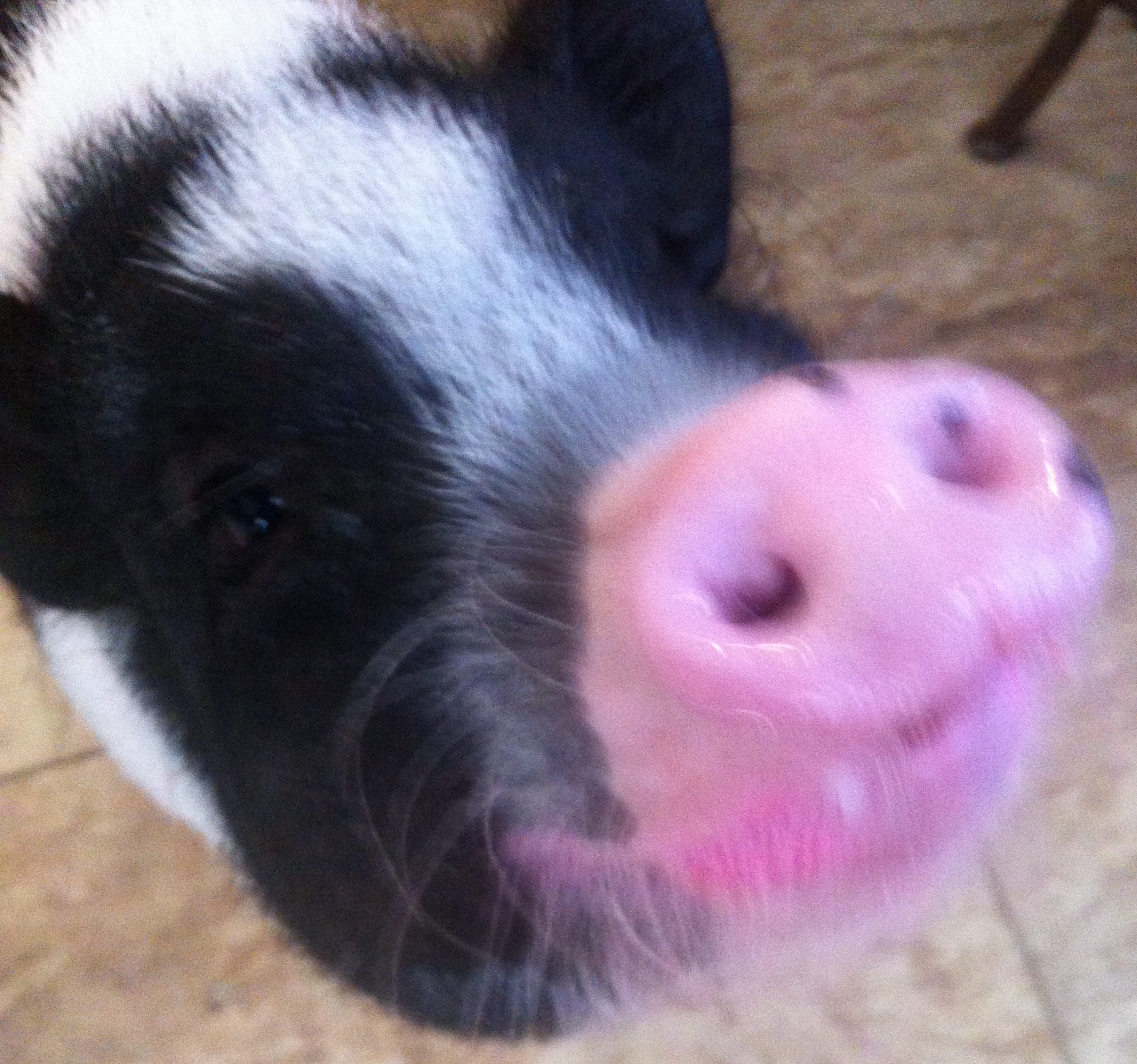
pink is her color!
Not bad, Piggie. Not bad.
Another ordinary posting
Posted: August 29, 2012 Filed under: breast cancer | Tags: gratitude after cancer, gratitude challenge, gratitude journal, Journeying Beyond Breast Cancer 8 CommentsToday’s installment in Marie’s infectious challenge comes in the form of a routine appointment with my orthopedic surgeon to check my new, improved knee. Going to a doctor who has nothing to do with cancer or infection is something for which I’m grateful. Just a regular girl, going to a regular doctor. I like that. My chart is nice and slim at the orthopedist’s office, just a regular chart. Not full of page after page after page of complications and problems.
Unlike my chart at a certain plastic surgeon’s office. At one of my many appointments there, Amy & I snapped a photo of my chart as we marveled at its girth. Sitting on the edge of the desk, that bad boy looked huge. So huge we just had to take a picture. Then we just had to take another picture to compare and contrast. Yes, everything is bigger in Texas, but this is ridiculous!

a very thick chart — there’s not much good news in there

an ordinary chart (L), next to my big mama (R)
Gratitude
Posted: August 24, 2012 Filed under: breast cancer, literature | Tags: breast cancer blogs, children's literature, Gerald and Piggie books, gratitude, gratitude journal, Journeying Beyond Breast Cancer, Mo Willems 19 CommentsMarie at Journeying Beyond Breast Cancer has issued a challenge. I can’t resist a challenge, so I’m in. Her idea? Take a photo each day of something for which I’m grateful and share it online.
Today I’m grateful for Mo Willems. He’s a children’s book author who writes a charming series called Elephant & Piggie. We’ve read this series a million times, and with titles like There Is a Bird on Your Head and I’m Going to Surprise My Friend, these books never get old. Even now that my favorite girl has way outgrown Mo’s books, I still smile when I think of Gerald & Piggie. As I recover from Wednesday’s knee surgery, I thought of Gerald & Piggie, and instead of Today I Will Fly, for me it’s Today I Will Walk. 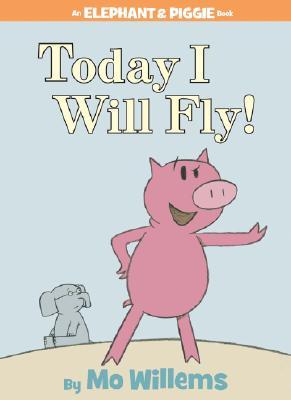
48 hours is about all I can take of the forced sedentary healing, so Today I Will Walk. Stiff-legged and slow, and probably a bit of shuffling, too, but Today I Will Walk.
My favorite girl and I were lucky enough to meet Mo Willems several years ago when he came to Blue Willow Bookshop. 
He read from his latest book, The Pigeon Wants a Puppy, and took questions from the audience. 
After his presentation, we stood in a very long line to have Mo to sign Macy’s books. He was funny and charming and everything I expect a kids’ book author to be. My favorite girl chattered endlessly about ideas she had for Mo’s books. She had a ton of story ideas in her 5-year-old brain, and I suspect it made perfect sense to her that they could collaborate. So when Mo asked Macy if she had any questions for him as he signed her books, she said, “What’s your phone number?” Sweet Mo was a bit taken aback, and when Macy explained that she has some ideas, he realized he didn’t need to panic, we weren’t a couple of crazy stalkers.

Meeting Mo and being in his presence and seeing how he interacted with all the kids was a super cool experience. Today I’m grateful for Mo Willems. And Today I Will Walk!
Letting go
Posted: July 25, 2012 Filed under: breast cancer | Tags: finding a new normal after cancer, inspirational quotes, letting it go, life after cancer, Tao Te Ching, Taoism 13 CommentsBecause I really love words, I often come across a quote that speaks to me. I usually scribble it on a receipt or piece of scrap paper at the bottom of my purse, or I hastily type it into the notes app on my phone, with every intention of revisiting the quote and why it caught my attention. Sometimes the revisiting results in a blog post, but more often than not the note languishes until I clean out my purse or go to make another note on my phone. Then I wonder, where did I find this quote, and what did I intend to do with it? I blame cancer and infection and their long-reaching tentacles for compromising my previously functional brain.
The latest scribble in the bottom of my purse is a good one:
“When I let go of what I am, I become what I might be. When I let go of what I have, I receive what I need.” — Tao Te Ching
Ah, yes, the letting go. I’ve never quite understood the idea of “just let it go” when bugged by something. While I don’t endorse fretting and harumphing, I wonder what manner of insensitivities would be committed if people just turned the other cheek and acted as if nothing wrongful had occurred.
Needless to say, I’ve never been particularly adroit at just letting things go.
When someone cuts in front of me in line, I point out that I was there first. When a doctor keeps me waiting for hours in the waiting room, I mention that while I understand that things come up and emergencies do arise, my time is valuable, too. When my son’s All Star team was wrongly accused of misdeeds this season, I let the accusers know that their underhanded tactics did not go unnoticed. When a member of my inner circle acts unkindly, I don’t hesitate to bring the errant behavior to her attention.
Sometimes speaking out changes things: the line-jumper realizes he/she isn’t the only person on the planet. Sometimes it doesn’t change things: doctors overbook themselves, 12-year-old baseball players are punished because of so-called grown-ups’ selfishness, and friendships run their course.
I’ve been told that people admire my willingness to speak up in the face of blatant wrongdoing. “I wish I was ballsy like you” or “I’m too chicken to say what I really think” are among the comments I’ve heard on this topic. I’d love to take credit for being brave and outspoken, as if it were planned and orchestrated for the greater good. The truth is, however, it’s not something I plan; it comes out because I don’t have a very reliable filter. I’m not so good at letting it go.
Change does come from having cancer and facing all of its myriad unpleasantries and challenges. I have learned during the course of my cancer “journey” to let some things go. While I won’t insult you with the platitudinal idea that cancer has made me a better person (I was just fine before, thank you very much), it does have a way of forcing things into perspective. I will never go quietly into the night with the idea that any of this is fair, but I won’t fight it, either. Sometimes bad things do indeed happen to good people. Sometimes life intervenes to rearrange the order of things, to shake things up a little, or a lot. I’ve learned a lot on this cancer “journey,” from the technical to the philosophical, from the underside of fear to the crushing tyranny of bad breaks and complications straight through to the unmitigated joy of coming out the other side, battle-weary and scared shitless yet proud in the knowledge that no matter what this beast flings at me, I can take it.
I will likely continue speaking out against what I perceive as the injustices in my life; a tiger doesn’t change its stripes, after all. I will nag the line-jumpers of the world until they see the error of their ways. I will savor Tao’s words and reflect on the idea that in letting go of things or friendships that may not be working, I open myself up to receiving something even better.

Another day, another MRI
Posted: July 20, 2012 Filed under: breast cancer | Tags: knee scope, knee surgery, life after cancer, MRI, patellar lateral release, patellar maltracking, PRP injection 13 CommentsLong time, no blog, I know. Thanks to you faithful readers who have inquired about the reason for my silence. Sometimes no news is good news, but once you bare your cancer-laden soul in a blog, silence can be interpreted as a sign of trouble. Not so here; rest assured that if there were new and nasty developments, I’d spew the gory details. That’s how I roll. I’ve been busy with summer stuff: ferrying my favorite girl back & forth to day camp, hounding my video-game-addicted boy to work on his “page a day” algebra packet, devising a piggie-proof lock for the pantry, and keeping my potted plants alive as we alternate between drenching rains and scorching sun. Oh, and wading through the mounds of red tape that ensued after my girl and I were in a pretty bad car crash last weekend. Wet roads, bald tires, and independent rear suspension became a perfect storm that landed us in a ditch with the airbags deployed and the car inoperable 200 miles outside of Houston. Never a dull moment.
In light of all this, the MRI that I had Wednesday was a high point. Thankfully it was not cancer-related, but it brought back a whole lot of cancer-related thoughts. I guess it’s the case of once a cancer patient, always a cancer patient. In fact, it got me thinking — a lot — about May 7, 2010, just days after I’d been diagnosed with invasive breast cancer at the tender age of 40. On that day in history, I was enduring “test-a-palooza” in which I spent the entire day at the hospital for an L-DEX, chest x-ray, MRI, and bone scan.
Here’s what I had to say back then about the MRI:
Three vials of blood and a dose of radioactive dye later, I was ready for the MRI. I’ve had an MRI before, and this was not what I expected. Instead of lying on my back and going through the tube, I was face-down on what Mona the tech called a massage table (I noticed real quick there is no massage). Imagine my claustrophobic heart singing when I saw the piped-in oxygen for the tiny little space in which my face was smushed.
Mona asked what kind of music I’d like, to drown out the noise. She said most people choose classical to help relax. I told her I prefer alcohol to help relax, but I’d try the music. She promised me a double martini, extra dirty, when we got done.
The sweet chirping of birds and melodic harps were quickly drowned out entirely by a ruckus that can only be described as a marriage in hell between a jackhammer, nuclear-reactor alarm, and emergency broadcast signal, in a successive repeating pattern. Mona wasn’t kidding when she said a lot of people come out of there with a pounding headache. I decided right then & there that I needed a double on that double martini order.
While it seemed like I was in there forever, it was really only about 40 minutes, and instead of lying there thinking about what an unholy racket and uncomfortable experience it was, I heard my mom whisper in my ear: “Every pounding noise you hear is you gearing up to kick the crap out of the cancer.” Course, she never would have said “crap” because she didn’t like cuss words, and would have said “peewaddle” instead, but I added “crap” for a little color. I had lots of time to think about her and her courage while I was in there, and it worked. Before I knew it, Mona came to get me off that crazy thing.
Wednesday’s MRI was on my knee, which has been barking at me for months and doesn’t always go along with my big ideas. Tennis, working out at the gym, swimming, and climbing stairs seem to be more than this old knee wants to do, and after stretching, foam-rolling, icing, and self-medicating with cold beer, it was time to face the fact that it wasn’t getting any better. My orthopedist says that some knees need to be scoped every 8 to 10 years, and my scope was 7 years ago, so there ya go. I guess 7 years of lunging, squatting, jumping, running, and springing have taken a toll. As per my usual, I refuse to go quietly into the night, and plan to do whatever it takes to get some more use out of these joints.
Conventional wisdom suggests two scenarios to fix my problem: do a PRP injection and see how far that gets me, or do another scope along with the PRP. The PRP alone is the much simpler course, and I’m all for quick recovery and little downtime, but in my heart of hearts I know I need the scope, too, and I learned long ago in my cancer “journey” to always go with my gut.
The PRP represents some pretty cool cutting-edge medical thinking in an emerging field called Orthobiologics, and all the cool pro athletes are doing it so why not me, too? Troy Palamalu and Hines Ward both did it, as did Tiger Woods — repeatedly, and perhaps to correct some of the damage his jilted wife did to him with a golf club. Kobe Bryant got some, and Alex Rodriguez traveled to Germany to get his PRP. He thinks he’s so special.
Here’s how it works: under the beautiful twilight haze of propofol, 30 ml of blood is collected and spun in a centrifuge to separate the plasma from the whole blood. The plasma, which is very concentrated and full of healing goodness, is then injected into the injury site and the magic begins. Because PRP is autologous, it’s a good choice for me: my body is quite the xenophobe and reacts quite strongly to anything foreign like tissue expanders or a port.
I was all geared up for the idea of the scope and the PRP when my awesome orthopedic surgeon called to say there was something unexpected on the MRI. Surprise! A complication! My kneecap is misaligned and has slid to the outside instead of staying in the center groove at the end of the thigh bone as the knee bends. Fantastic. There goes my tennis season. Me and my stupid patellar maltracking. The fix? A lateral release, which is done during the scope and involves cutting the lateral retinaculum, which is the tissue attached to the outside of the kneecap.
If it were just the scope and the PRP, no big deal. A bit of a slow recovery for a go-getter like me, but very manageable. The lateral release doubles the recovery time, and involves a lot of pain and swelling. Sigh. Big sigh. Never a dull moment, indeed.
Odd girl out at the oncology office
Posted: July 11, 2012 Filed under: breast cancer | Tags: cancer battle, getting back to normal after cancer, life after cancer, post-mastectomy infection, psychological effects of cancer, PTSD, survivor's guilt 31 CommentsI’ve been on hiatus from blogging but rest assured, all is well. No real reason for the hiatus other than the fullness of life. Although I’ve not been wrapped up in the hurried pace of the school year, so far summertime finds me still going & blowing as usual. Less than three weeks until our annual vacation to Salisbury Beach, though, and I will slow down then. As the sage Zac Brown says, I’ll have my toes in the water, ass in the sand, not a worry in the world, a cold beer in my hand. Can’t wait.
Yesterday was my quarterly check-up with my cutie pie oncologist. My intrepid appointment companion Amy is currently living the good life seaside on the East Coast, so I had to go it alone. She strongly suggested I reschedule, lest she miss a visit with Dr Cutie, but alas, I carried on without her. She’ll have to wait until November to lay eyes on him, as I’ve graduated to three visits a year with him. That’s my reward for being two years out from the dreaded disease: fewer oncology appointments.
Despite one fewer chance a year to gaze upon Dr Cutie as he imparts his wisdom, this is a good thing because I found myself feeling guilty sitting in the waiting room. Of the four other patients waiting for the good doctor, I was the only one with hair. The others were not only bald but quite sickly looking (and a good 20 years older than me, as well). As I perched on a chair in my workout clothes, planning to hit it hard at the gym as soon as I got the requisite visit out of the way, I was filled with a sense of guilt over my good health.
I could feel the eyes of the other patients on me, and I imagined them wondering, as I would in their shoes, what a strapping gal with a full head of hair, color in her cheeks, and a spring in her step was doing at an oncologist’s office. Had the shoe been on the other foot, I would have assumed this picture of health was meeting someone there, or perhaps had found herself in the wrong office and had not yet realized the mistake.
My guilt was somewhat assuaged by the stark recollection that there was a time, not so long ago, when I was the sickly looking one, dragging myself from one appointment to the next, consumed with healing after a double mastectomy and overwhelmed by a post-surgical infection. I remember well the days of envying the “normal” people who walked with ease and were unburdened by the pressing concerns of cancer, treatment, and their ugly fallouts. Ditto for all the days (close to 30 days all told that one summer) I spent in the hospital. Pushing my IV pole on endless loops around the hospital halls, I would gaze longingly at the healthy people out and about and wish I were among them.
Although I’m two years out from the dreaded disease (or, two years and 2 months, as Dr Cutie so astutely recited from memory), the recovery process from the infection was quite lengthy, and it’s really not been all that long since I was freed from the clutches of that wretched bug. Many times as I moved from the infectious disease team’s office in the Texas Medical Center to Dr Cutie’s office around the corner from home and to the plastic surgeon’s office halfway in between the two, I stared hard at the healthier specimens I saw along the way. I remember feelings that ranged from outright envy to smoldering anger at these people who went about their daily business the way I used to. I envisioned these people getting their kids off to school, hitting the gym, running errands, lunching with friends, and doing household chores with ease, the way I used to. I imagined the fabric of their lives being uninterrupted by cancer, the rudest of guests, and assumed that they sailed through their days focused on minor inconveniences rather than big-time medical crises. First-world problems like a cancelled hair appointment or a rained-out tennis match were screechingly replaced by real-world problems like a hole in one’s chest wall that just won’t heal and an insidious bacteria that evades treatment quite stealthily.
Was it survivor’s guilt that hit me yesterday in the doctor’s office? Perhaps. I’ve never been one to wonder “why me?” — neither in terms of the roulette wheel of whose genes will come up hinky and necessitate a diagnosis, nor in terms of why am I now healthy while so many others are sick. Seems like a colossal waste of time and energy to me. I don’t spend much time thinking back about the sheer hell I endured with that nasty infection; partly because I don’t want to go there, and partly because my brain works hard to protect me from going there. There are plenty of gory details I have to work hard to conjure up, and while my intellectual brain knows that of course I did go through all that, my sympathetic brain says let’s not rehash that ugly past and prevents me from really remembering how awful it was. Better to smile encouragingly at the other patients in the waiting room and spend a few minutes of quiet reflection on the road I’ve traveled and how far I’ve come.
Loyalty
Posted: June 26, 2012 Filed under: baseball, breast cancer | Tags: breast cancer in young women, Confucius, Fenway Park, friends and cancer, Kevin Youkilis, loyalty, Michael Lewis, Moneyball, Nomar Garciaparra, Red Sox, Red Sox Nation, The Deadliest Catch, trades in baseball, Youk! 7 CommentsThe news of our beloved Red Sox trading Kevin Youkilis got me thinking about loyalty. It’s an under-appreciated trait, IMHO, and its value tends to be most noticed in its absence.
Youk was one of my favorite players, both for his on-field production and for his feisty attitude. He spoke his mind and took the heat that ensued from fans and press who prefer their players to shut up and play. He was part of the Red Sox from 2001, and was an integral part of the roster that my family fell in love with in our early days of Sox indoctrination. 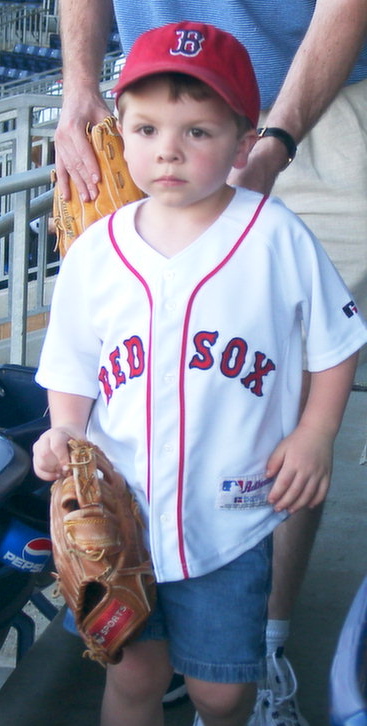 I’ll never forget this little Sox fan asking me what his beloved Nomar did wrong when he was traded in 2004. This loyal fan didn’t yet understand that baseball is not just his favorite game, but a business as well, and players are commodities that are moved and used to ensure financial success. It’s a hard-learned lesson and one that removed forever a piece of my little guy’s innocence.
Despite Youk’s last name, he’s not actually Greek but this Greek girl considers him an honorary countryman. In the wildly successful book Moneyball, author Michael Lewis christened Youk “Euclis: The Greek God of Walks” and the nickname stuck. I appreciated Youk for a lot of reasons, not the least of which was his record for most consecutive errorless games at first base (until Casey Kotchman came along, anyway). He’s scrappy and intense, and as Boston Globe writer Jackie MacMullan so aptly described, “He does not look like an MVP candidate; more a refrigerator repairman, a butcher, the man selling hammers behind the counter at the True Value hardware store.”
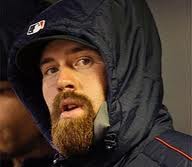
mlb.si.com
I’m thinking he could easily pass for a crew member on “The Deadliest Catch” as well. All part of his charm. His Gold-Glove-Award-winning, three-time MLB All Star, and two-time World Series champion self will be greatly missed by this member of Red Sox nation. Upon my first visit to Fenway, a decade ago, I couldn’t understand why fans uniformly booed Youk when he came up to bat. I quickly realized they weren’t booing but chanting “Yoooooooooouk!” I hope to see many jerseys sporting #20 when we go to Fenway in August. I’ll be wearing mine.
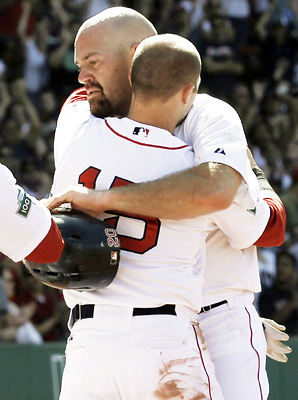
mlb.si.com
Is it strange to feel so sad seeing our current favorite player hugging an outgoing Sox mainstay? Is it weird to feel bereft about a player’s departure from a favorite team? Is it naive to want everything to stay the same? Sometimes loyalty brings great sadness; to pledge oneself opens one up to vulnerability. And unfortunately, loyalty does come and go. I learned this firsthand when given a cancer diagnosis.
A crisis, whether health or other, galvanizes some and chases away others. Friends show their true selves, for good and for bad. Some of the people I most expected to be there for me upon diagnosis and in the trying days beyond were the first to depart. The reasons are as varied as the people. I imagine fear is top among the list of reasons people flee when a close friend is given shockingly bad news. While everyone knows in their rational brain that cancer isn’t contagious, the proximity of a dreaded disease causes some people to distance themselves from the afflicted person. Personally, I don’t get that, as I was brought up to believe that a time of crisis is the best time to be by a friend’s side. This lesson was reaffirmed and underscored tenfold as new friends appeared on the scene in my hour of need. Y’all know who you are, and I thank you, again and again. Another reason for the exodus is lack of loyalty. My sweet mama used to tell me it’s easy to be a good friend when everything is peachy, but the real friends, the loyal friends, will be there when things aren’t so peachy. As usual, she was right.
Confucius said, “The scholar does not consider gold and jade to be precious treasures, but loyalty and good faith.” I’m not much of a scholar, but I do treasure loyalty.
Susan, science, and stagnation
Posted: June 14, 2012 Filed under: breast cancer | Tags: Army of Women, bone marrow stem cell transplant, Dr Susan Love, Dr Susan Love's Breast Book, Estee Lauder, Ford Warriors, leukemia diagnosis, man cured of HIV, The Breast Cancer Awareness Campaign, Uneasy Pink 27 CommentsI’m not sure “stagnation” is an actual word, but I like the alliteration so it stays. It’s my blog, after all, and I can make up words if I want to (but I’m still not comfortable ending a sentence with a preposition, hence the parenthetical aside).
Ok, with that out of the way…on to the news.
Susan Love announced that she’s been diagnosed with leukemia.
My immediate response to this news: Dammit.
Dr Susan Love is someone I respect and admire, and she’s done more for the breast cancer cause than a room full of Komens, IMHO. Her book, Dr Susan Love’s Breast Book, is considered the bible for those with breast cancer. Her focus is on research, not ribbons. The mission statement for her organization is this: “The Dr. Susan Love Research Foundation works to eradicate breast cancer and improve the quality of women’s health through innovative research, education, and advocacy.” She mobilized the Army of Women to get women of all ages, races, and stages involved in research. I’ve participated in several AOW studies, from simple online surveys to blood tests, and believe wholeheartedly in what she’s doing. Love says, “The key to ending breast cancer is to learn how to stop it before it starts.” YES! She also says,
“I have spent my whole life working in the field of breast cancer. At this point I am frustrated that we are still doing the same treatments with about the same results as when I started thirty years ago. Now that we can get to where breast cancer starts we have the opportunity to eradicate it. I am excited and impatient. The road is clear. We can go slowly or quickly, but everyday that we delay another 592 women will be diagnosed and 110 will die. The cost is too high to hesitate. This is our job not our daughters’, granddaughters’, nieces’ or nephews’. We can do it and we have to do it!”
When Love announced her diagnosis yesterday, she was resolute in facing the bad news, saying “As many of you know, I have never shrunk from a challenge. I plan to bring my indomitable drive and energy to overcoming this and will be back to work as soon as possible.” Go get ’em, Susan!
Next, the science news. A 45-year-old Bay Area man has been cured of HIV and the cause of his cure is a bone marrow stem cell transplant. My friend Katie at Uneasy Pink sums up the science of this breakthrough much better than I; check it out. Long story short is that the guy, who tested positive for HIV in 1995, also battled leukemia and underwent a bone marrow stem cell transplant in Berlin in 2007. The donor was immune to HIV, and as those cells were transplanted, so was the immunity.
Famed AIDS researcher Dr. Jay Levy, who co-discovered the HIV virus, said this case opens the door to the field of “cure research,” which is now gaining more attention. “If you’re able to take the white cells from someone and manipulate them so they’re no longer infected, or infectable, no longer infectable by HIV, and those white cells become the whole immune system of that individual, you’ve got essentially a functional cure.”
I am all kinds of fired up about this incredible news.
There is great potential, and the idea of cure research is exciting. I would love to see if spill over into breast cancer. As Katie puts it, “I understand that HIV/AIDS and cancer are very different diseases. But look at the progress that has been made over several decades. In 1983, the idea that we would be deciding whether someone was cured or not of AIDS, that we would be debating how few cells mean cure, was unthinkable. Back then, virtually everyone who contracted AIDS died of it, and in about 9 months from diagnosis. Now the average survival time after diagnosis is 24 years.”
Survival time of 24 years. Remember when AIDS first hit the scene in the early 1980s, and a diagnosis was the same as a death sentence? Now, 30 years later, AIDS experts are talking about cure research? Amazing.
Why isn’t this kind of thinking being applied to breast cancer research?
I’m guessing the reasons are many, but can’t help but think that one reason is because we’ve made breast cancer so pretty. It’s one of the most heavily funded cancers in terms of research, yet as Dr Love points out, treatments and results are the same now as they were 30 years ago. I know, I know — cancer is incredibly complex and varied, not just in terms of the different types (breast, colon, etc) but within each type, there are immense differences. Then there are the differences in each person who’s diagnosed, as well as the differences in each cell. I don’t expect a panacea, but I do expect cure research.
It’s funny — not ha ha funny but peculiar — that in trying to de-stigmatize breast cancer, we’ve ended up trivializing it. The glamor disease is marketed as rosy, fun, and celebratory, when in fact, it’s deadly. And in the cases in which it doesn’t kill its victims, it nonetheless maims them and messes them up in untold ways. Even the “lucky ones” who “caught it early” and “enjoyed the best possible outcome” are scarred, physically and emotionally.
I saw this ad in a magazine recently, and had to rip it out and put it on my desk so that I’d remember to blog about it. This is what I’m talking about, people. 
Do we really need ads like this?
What does this accomplish, exactly? As a woman, this makes me mad. As a woman diagnosed with breast cancer, it infuriates me. And as a woman who has undergone reconstruction and is facing the hard truth that no amount of surgery will ever restore what I once had, it makes me want to strangle someone with my bare hands. Maybe I’ll start with those models then move on to the jackass behind the ad campaign.
If you zoom in on this dumb ad, it’s not entirely clear what’s going on here besides lots of skin, perky breasts, and a hand. This is what passes for breast cancer “awareness?”
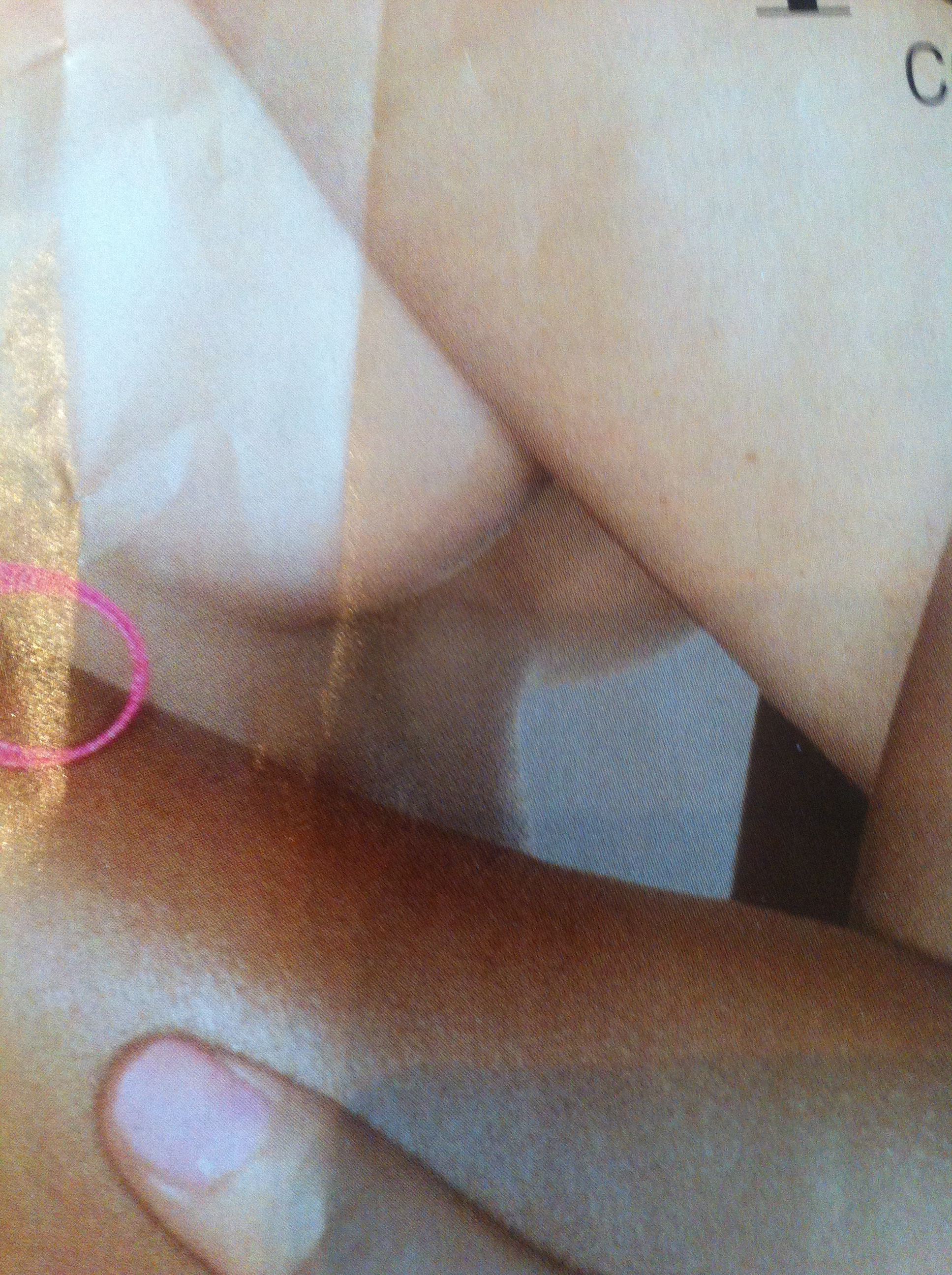
Did the ad execs behind this think the hint of lesbianism would sell? Did they consider that the woman of color in the middle would be completely shafted should she be diagnosed, because black women die from breast cancer far more often than white women?

Then there’s the text of the ad: Connect, communicate, and conquer? Could this be any more vague and vapid? What the hell are they even selling? I had to look closely and read the fine print to see who put this ad out there. It’s on the very bottom of the ad — the Breast Cancer Awareness Campaign, which is run by Estee Lauder. Again, what the hell are they selling? Remove the pink-ribbon bracelet and this could easily be an ad for a plastic surgeon hawking breast augmentation.
I’ve had it with this side of the “awareness” campaign. Can anyone tell me what this kind of marketing does to actually help our cause? I know the research dollars have to come from somewhere, but surely we don’t need naked breasts to plead our case.
A quick google search turned up plenty of these kinds of ads.



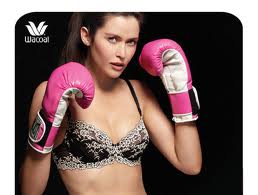
 These last two are my favorite. The boxing girl, who I’ve written about before, because the idea of being a fighter when it comes to breast cancer is so pervasive, and the flip side to that idea being the ones who die from this wretched disease somehow didn’t fight quite hard enough and “lost the battle.” The “Expose the Truth” ad, from the Breast Cancer Research Foundation, because the “truth” has nothing at all to do with the model they chose to represent their message. The truth is, ads like these perpetuate the idea that breast cancer is a sexy, pretty disease.
Why can’t we have more ads like this?
Or this?
Or this?
Or this?
We sure don’t ever see ads like this, do we?
The last installment
Posted: June 13, 2012 Filed under: breast cancer, infection, kids | Tags: A Prayer for Owen Meany, favorite books, FEMA trailers, Hurricane Katrina, John Irving, kids on 4-wheelers, New Orleans, Oscar Wilde, Picture of Dorian Gray, trailer auction 12 Comments There’s a line in the movie Ice Age–during the fight between the dodo birds, Sid, and Manny over some melons–that applies here. The animals are scrambling to scoop up the melons, which are in short supply, and their bumbling leads to the melons being misappropriated. Sid the sloth gets the final melon but drops it when he’s swarmed by dodos. Manny grabs the melon with his trunk, but loses it when a dodo bites his tail. He throws the melon into the air and the dodos make a final play for it, but Sid catches it and the dodos fall over themselves, exclaiming, “The laaaaast melon.”
What does this have to do with the price of tea in China? Be patient, I’m getting to it.
Just like the laaaaaast melon, this is the last installment in the northern Louisiana series. Our trip last week has provided such good blog fodder, like this post about the trip itself and this post about puttin’ up corn and this post about skeet-shooting and this post about the best practical joke in a long time, maybe ever.
This wrap-up features a FEMA trailer, my favorite girl acquiring a new skill, yet another cute dog, a slave grave, and wisdom gained from the country. To say that this trip was a huge departure from the everyday minutia of my normal life — kids, pets, suburbia, and searching for the new normal after breast cancer — would be quite the understatement.
 The FEMA trailer sits behind Mama & Papa’s house. Bought at an auction after its displaced residents no longer needed it, the outside looks what I imagine it looked like while being used as temporary housing after Hurricane Katrina demolished New Orleans in August 2005. The inside, however, has been outfitted with some custom woodwork and a few of Papa’s special touches to create a mighty fine fishin’ trailer. In fact, on the table is Papa’s computer-generated shopping list of supplies he’ll need for the next fishing trip.
The last of the 145,000 FEMA trailers used to house displaced people in Louisiana and Mississippi after Katrina was recently removed from New Orleans. Many of the trailers were sold by FEMA at auctions, and some were used to house workers assigned to clean up the Deepwater Horizon/BP mess in April of last year. After housing some 770,000 newly homeless who were displaced after Katrina destroyed 75 percent of housing units in New Orleans, the trailers have been snapped up by outdoorsy folks who need a place to hang their hat after a long day fishing or hunting. 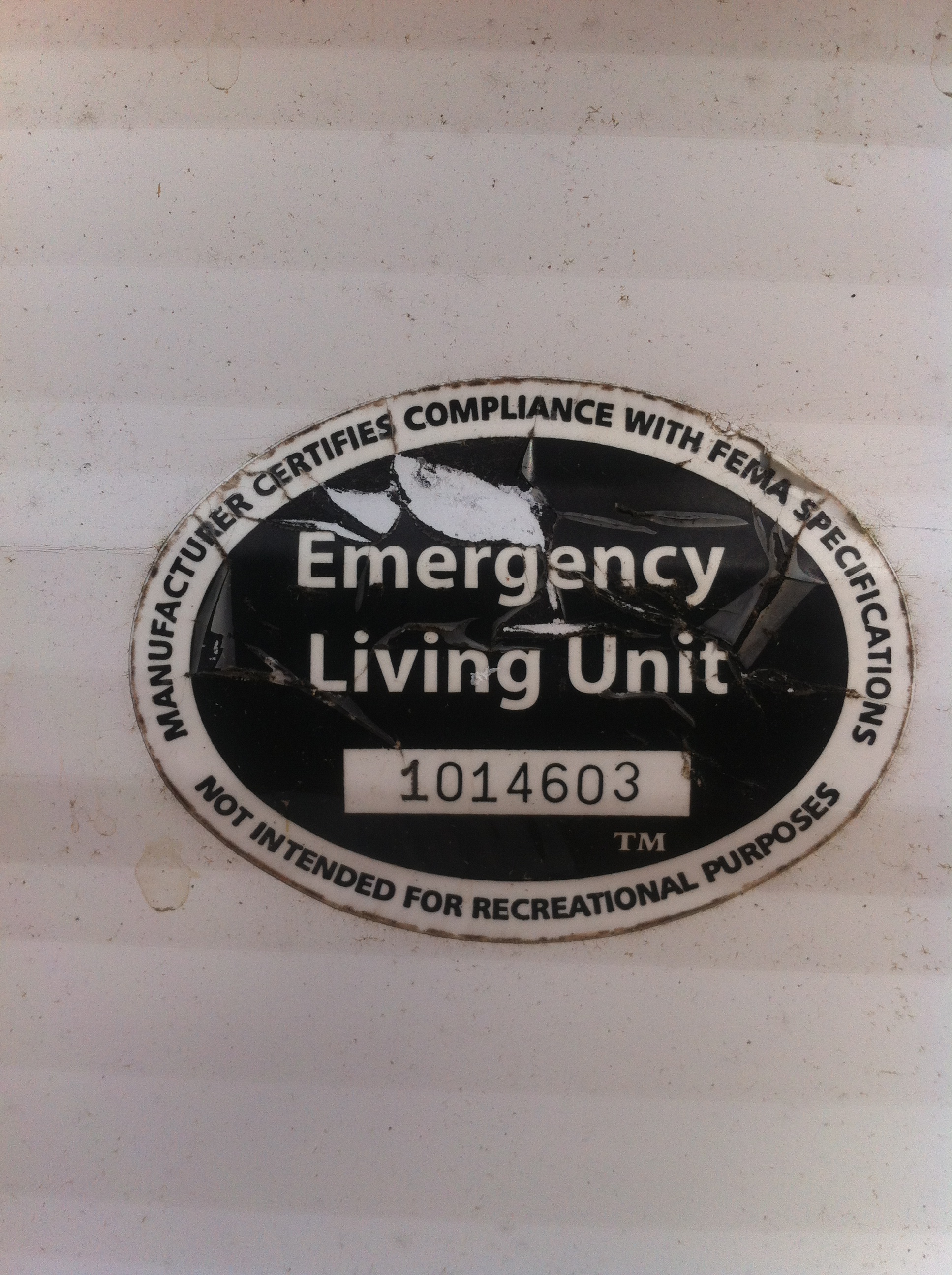
It was cool to see this piece of history. FEMA trailers were such a ubiquitous part of the storm, and will remain a symbol of the size and scale of the damage Katrina inflicted. Living along the Gulf Coast myself makes me patently aware of the power and fury of hurricanes, and Katrina was a doozy.
On a much lighter note–Macy’s new skill. My favorite girl learned how to drive a 4-wheeler. All by herself. As ubiquitous as FEMA trailers were in NOLA, 4-wheelers were everywhere we went, and at age 10 my girl was a bit long in the tooth to be just learning. That’s what you get as a city-slicker, however.
Macy wasted no time in learning, and did well for a city girl. With Molly the dog leading the way, Macy explored the trail that winds through our hosts’ property. Wish y’all could have seen her face as she had her lesson from Amy. It was a curious mix of wonder, excitement, concentration, and reverence all stirred together. Like the complex and many-faceted girl she is, I suppose. A lot of kids would take that 4-wheeler and gun it, tearing all around the property, but this girl was careful and methodical about driving. I hope that’s the case when she turns 16!

Another cute dog was on hand, bringing the total of new furry friends to at least 7.  We met this little charmer at Gina’s house as we sipped a glass of wine by the pool before dinner. She belongs to a neighbor but comes to Gina’s to visit. No bigger than a minute and so meek she crawled on her belly to greet us, I couldn’t resist pulling her into my lap. Her name is Jill, but the charming northern Louisiana pronunciation is “G-eeeeeel.” She reminded us so much of our sweet doggie friend Lima. Perhaps they’re distant cousins.
It was also at Gina’s that we saw the slave grave and expounded on the story of Josephine. On one of the many nights Amy stayed with me in the hospital during my countless hospitalizations thanks to mess that is cancer, she told me the story of Josephine, and it was amazing to be on her turf after hearing so much about her. 
Listening to Amy tell me about Josephine while I endured yet another night on scratchy hospital sheets fighting that dadgum post-mastectomy infection was a memorable escape during a time of hardship. It’s the story of a young girl who lived and worked on the Shelton Plantation in the mid-1800s, which is now the site of Gina’s beautiful home and acres of beautiful woods. It’s believed that Josephine’s father was the plantation owner and her mother was a slave. Deep in the woods lies this grave marker.  It’s a simple yet beautiful grave marker, and an interesting piece of the past. Coming across the grave site in the woods was a profound experience that reminded me that life is fragile and fleeting. This girl was just 19 and a half when she died–curiously enough, at the same age as Amy’s brother, Sam, who is also buried on Gina’s property.
  The family decided in the wake of Sam’s tragic death to officially designate a portion of Gina’s land as a family cemetery. It’s a beautiful and serene patch of woods that invites lingering, contemplating, and remembering. My mom’s gravesite is the last place I’d go to feel close to her, and to me the conventional cemetery does precious little to invoke a sense of connectedness to the departed one. If she were laid to rest in a beautiful and sacred spot like this, however, it would be a different story, and I can imagine sitting under the tall trees and talking to my sweet mama like we used to do every single day.

I’ve heard a lot about Sam and know by the way his sisters speak of him that he was someone special. Losing someone you love is hard, hard, hard to take, and when that someone is young and killed unexpectedly like Sam was, the tragedy is especially long-legged. I’ve learned on my own that grief is a heavy and long-lasting thing, and I felt that lesson keenly while in the woods the other day. In A Prayer for Owen Meany, one of my all-time favorite books, John Irving writes:
“When someone you love dies, and you’re not expecting it, you don’t lose her all at once; you lose her in pieces over a long time — the way the mail stops coming, and her scent fades from the pillows and even from the clothes in her closet and drawers.”
I know this must be true of Sam, too. It was a privilege to be present in this lovely place, and the feeling of being there will stay with me.
The woods seem never-ending, and the blanket of trees served as a rugged and insular backdrop as I contemplated Josephine and felt the absence of Sam in this close-knit family. I never got tired of looking at the woods. My favorite girl kept saying, “The trees go on for days!” Indeed they do. 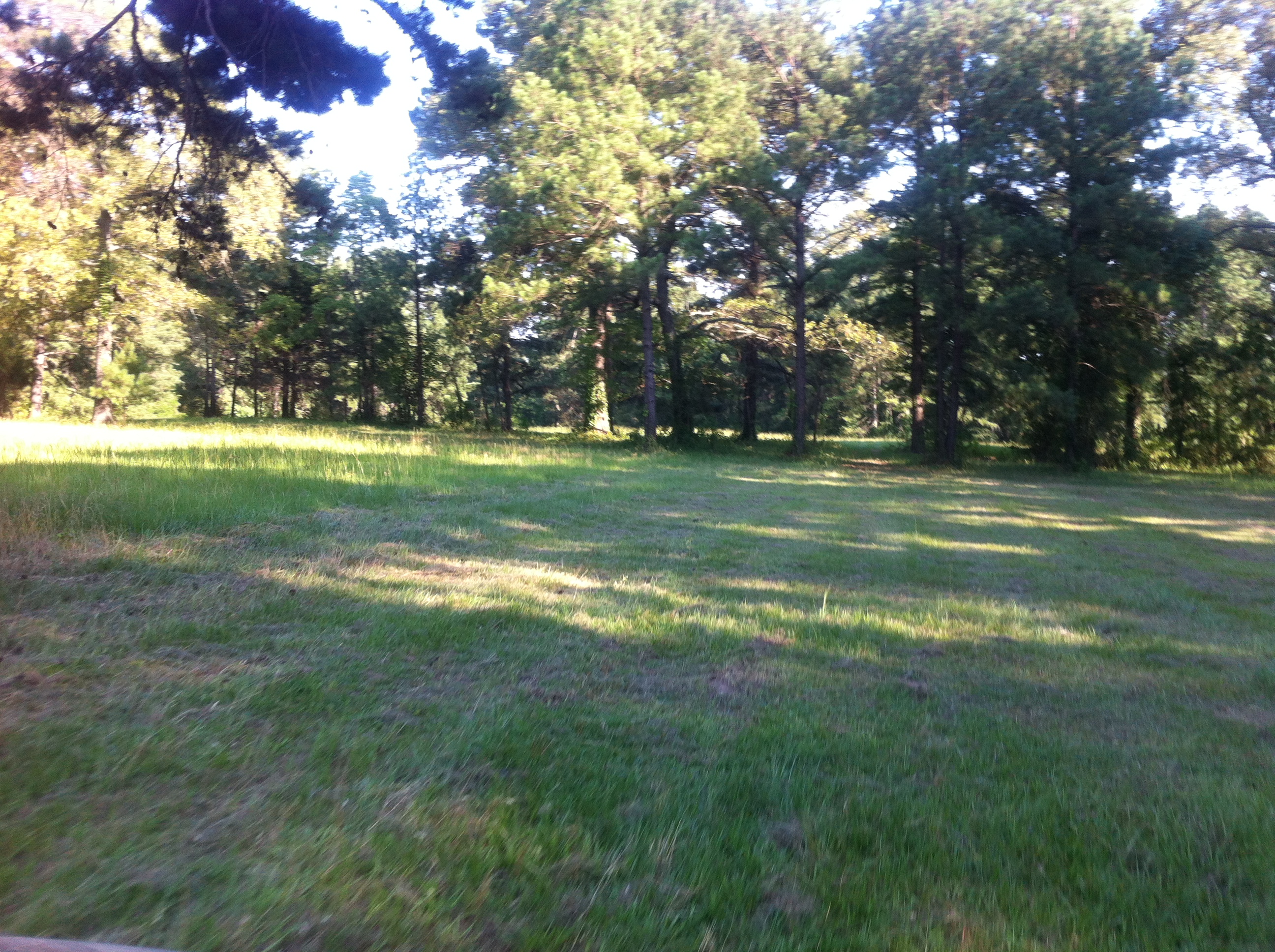
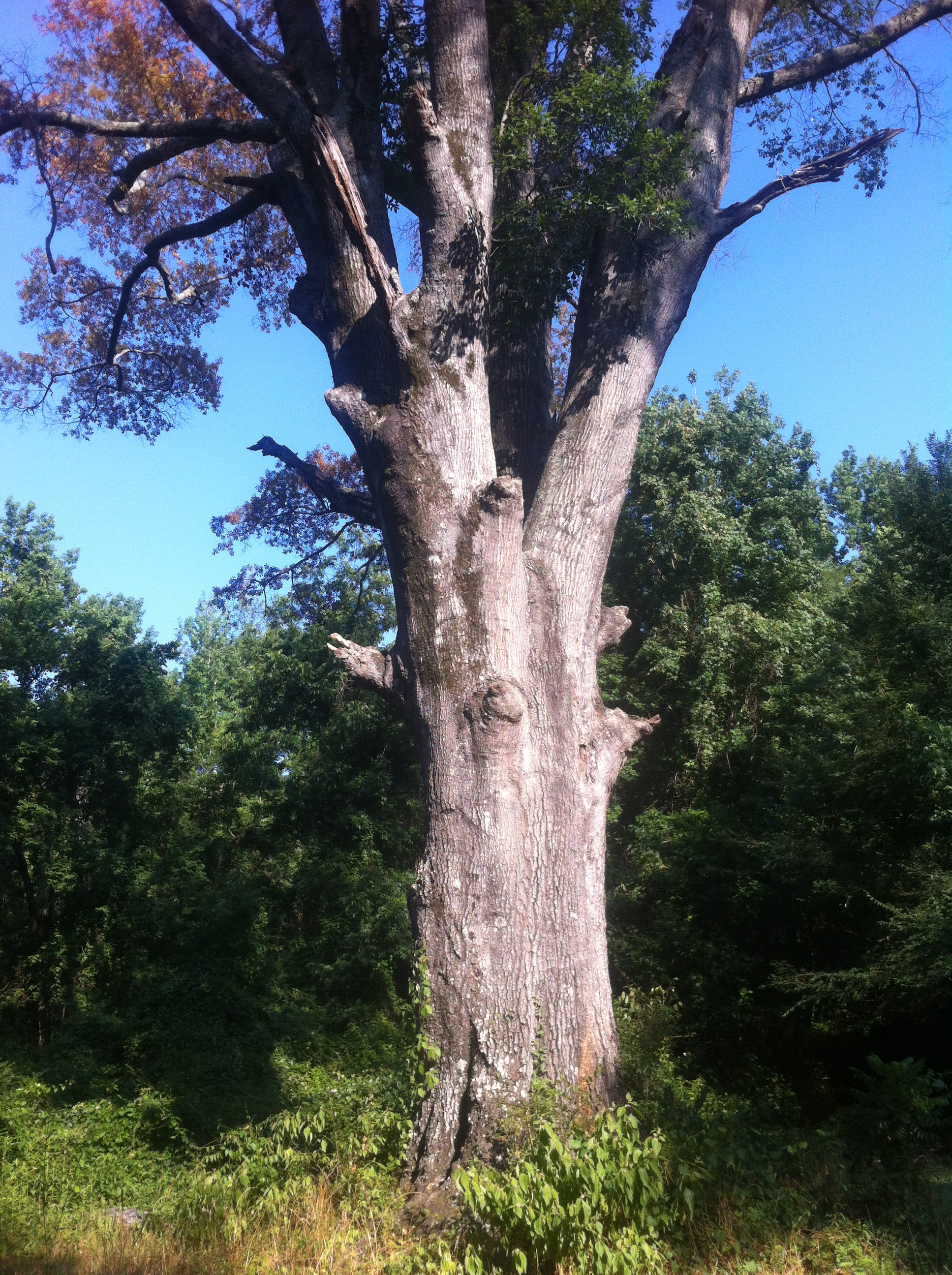
 I learned from this quick trip is that it’s good to get out of town and savor the purity and goodness of the country. Oscar Wilde wrote in The Picture of Dorian Gray that “anyone can be good in the country.” What a fantastic thought! As if the fresh air, wide open spaces, and relaxed pace in the country aren’t enough! Spending time with a family that truly and genuinely loves and treasures each other is a beautiful thing; being enveloped by such a family is an honor. I’ve always wished for a sister, and after being around Amy and hers, now I really wish I had one.
More wisdom was to be gained from the framed saying that Mama has hanging in her house: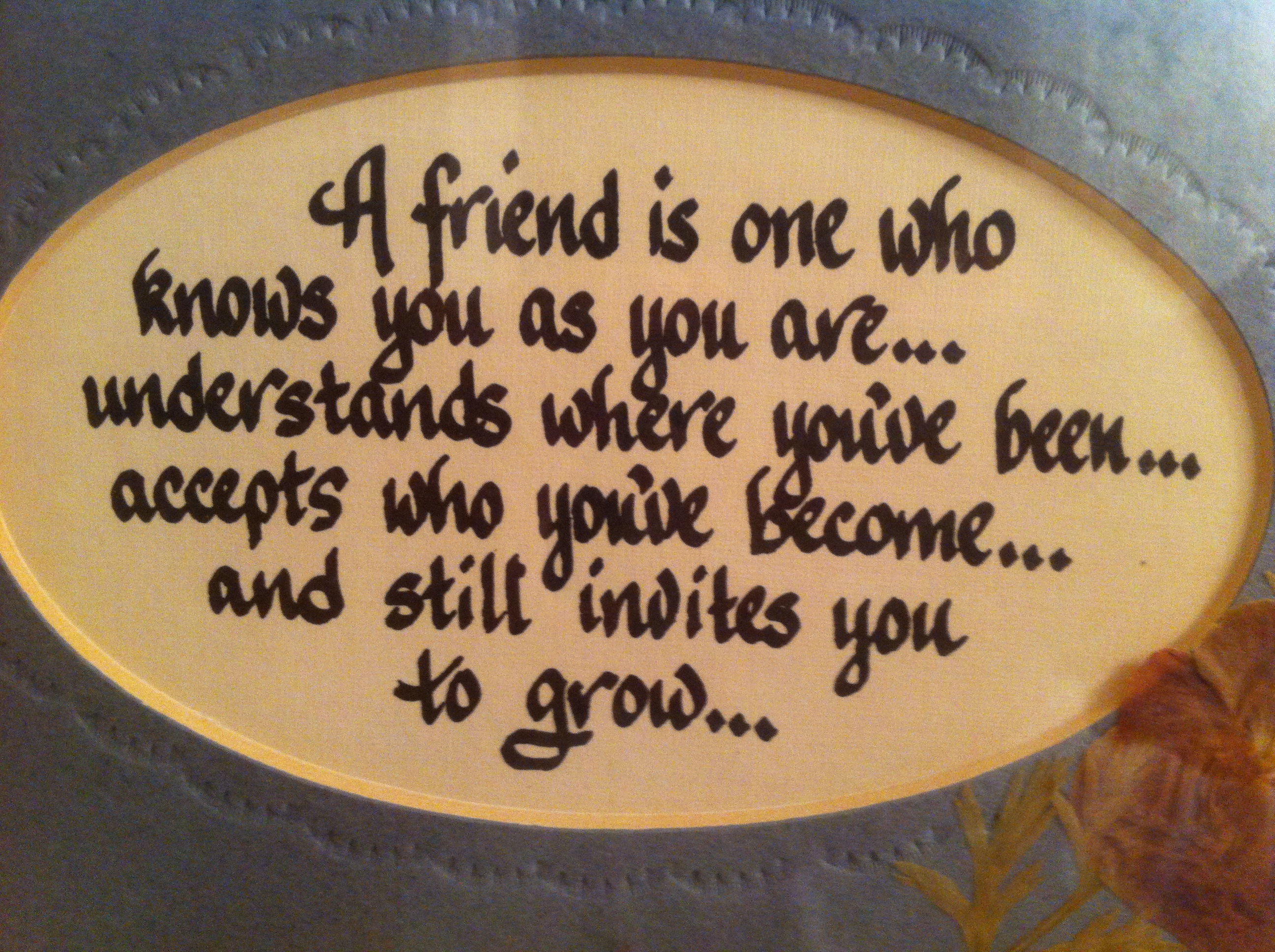
And then some more from the napkin displayed under a magnet in Papa’s shop: 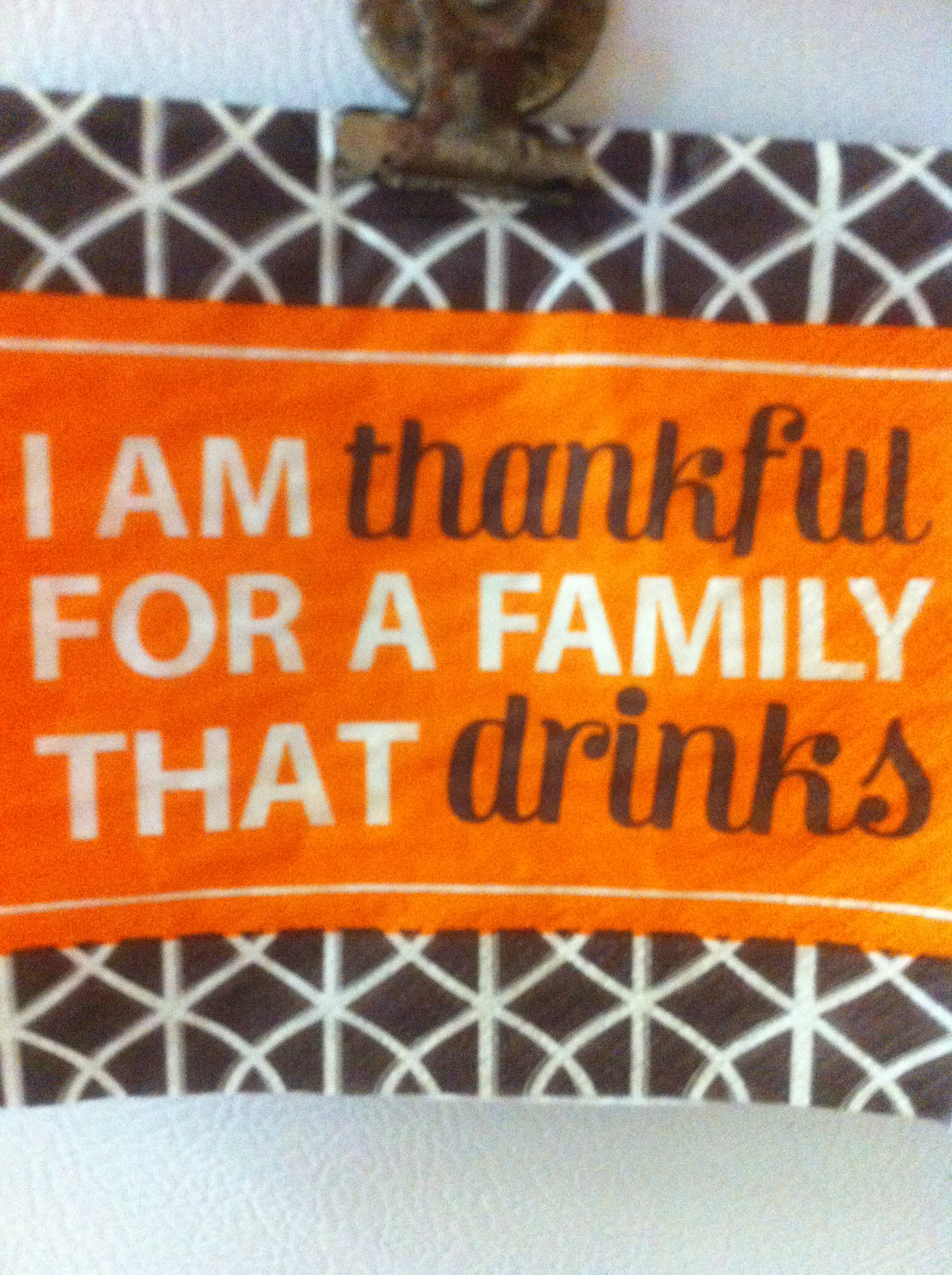
A little scare
Posted: May 29, 2012 Filed under: breast cancer | Tags: adversity, baseball metaphors, Elizabeth Edwards, Field of Dreams, micro mini pig, mini potbellied pigs, resilience, Shoeless Joe Jackson, swimming pig, W.P. Kinsella 14 CommentsI’ll say right here & now that the scare had nothing to do with cancer. There, now y’all can breathe.
The scare had nothing to do with cancer but everything to do with our little piggie. She fell in the pool yesterday, and scared the bejeezus out of me.

thedustofeverydaylife.blogspot.com
Luckily, I was across the pool from her and was able to get to her in a matter of seconds, although it seemed like it took forever. I was holding a book in my hand that doesn’t belong to me, and apparently I was thinking about not getting it wet because I held it above my head as I swam over to the submerged piggie. I don’t remember thinking about the book, but after the calamity I noticed it was safe and dry on the edge of the hot tub, between where I started my rescue attempt and where the distressed piggie was. Funny the way we react in the midst of chaos.
Our little piggie is a curious girl, and she was sniffing a pool float that had recently been vacated by me. It has floated up against the edge of the pool in the deep end, and she must have leaned toward it to investigate it. I had my back turned across the pool and didn’t see her reach out toward the float, but I heard a small splash and saw her sinking fast. She was at least a foot underwater before she started paddling madly to get herself to the surface. She reached the surface just before I reached her, and I’m happy to report that she can indeed swim, but because she’s built rather low to the ground, I think she’d have a hard time getting herself out of the pool without some help. I shudder to think of her swimming aimlessly in the deep end, unable to make purchase and unknowing about the safety of swimming to the shallow end and resting upon the tanning deck.
So this time, we were lucky. She didn’t have to swim aimlessly and I reached her quickly. We were both quite breathless with fear, and she recovered much more quickly than I. As soon as I grabbed her, she relaxed but I still had to swim to the shallow end while holding her so I could get her out of the pool. Upon having her four feet once again firmly planted on solid ground, she gave a big shake, scratched one of her ears with a hind foot, and sashayed over to a sunny spot to dry off. It took me a bit longer to settle down.
Lately I’ve been thinking about resilience, and how ironic it is that going through something life-altering and scary, like a cancer diagnosis, would seem to make one more resilient. Before I’d looked tragedy and hardship in the eye, I would have thought that the harder the times, the stronger the person. Maybe that is true for some, but for me it seems to be just the opposite: going through hard times has made me less tough. I’m fearful now when before I was brave. I’m full of anxiety when in the past, I was not worried. I’m would up now, imagining the worst-case scenario before it even has a chance to manifest; before, I wouldn’t even have thought to go there.
Martin Luther Kind once said, “The ultimate measure of a man is not where he stands in moments of comfort and convenience, but where he stands in times of challenge and controversy.” That’s food for thought, and if anyone should know about adversity and resilience, it would be Dr King. In the abstract, I would wholeheartedly agree with him. In reality, however, my research seems to prove the opposite: the more crap I endure, the worse for wear I become. And that old axiom about “whatever doesn’t kill you makes you stronger” — I’m starting to have serious doubts about that one, too. Long after our little piggie was safe and dry, my brain kept replaying the scene in the pool. A continuous loop of Piper underwater was stuck on “rewind” in my mind.
According to the experts, I’m wrong. A study on adversity and resilience done by Mark D Seery, PhD, at the University of Buffalo SUNY, indicates that people who’ve endured moderate trauma are better off than people who lead a charmed life.
Dr Seery says that “while going through many experiences like assault, hurricanes, and bereavement can be psychologically damaging, small amounts of trauma may help people develop resilience.” He likens moderate trauma’s effect on our resilience to exercise’s effects on our muscles: small tears grow back stronger than before. Perhaps it’s because going through hard times forces us to become better at coping with difficulty. Nobody said life was easy, and now Dr Seery says that’s a good thing. I’m going to take his word for it, since he is an expert. I’m going to choose to believe that I’m becoming more resilient with each hit, despite the fact that it seems like the more adversity I face, the more broken down I become.
One of my favorite descriptions of resilience is in W.P. Kinsella’s short story The Thrill of the Grass. Kinsella writes beautifully about his love of baseball (in his case, the Chicago Cubs). While he’s best known for Shoeless Joe, the basis for the stellar movie “Field of Dreams,” one line in The Thrill of the Grass stands out. He refers to a character who had “fouled off the curves that life had thrown her.” I’m a sucker for a good baseball metaphor, and Kinsella knocked that one out of the park.
Fellow BC warrior Elizabeth Edwards knew a thing or two about resilience. In fact, she wrote a book called Resilience: The New Afterword. In it she writes that “when the wind blows rough, the tough adjust their sails.” Or, they fish their little piggies out of the pool.

 The Pink Underbelly